

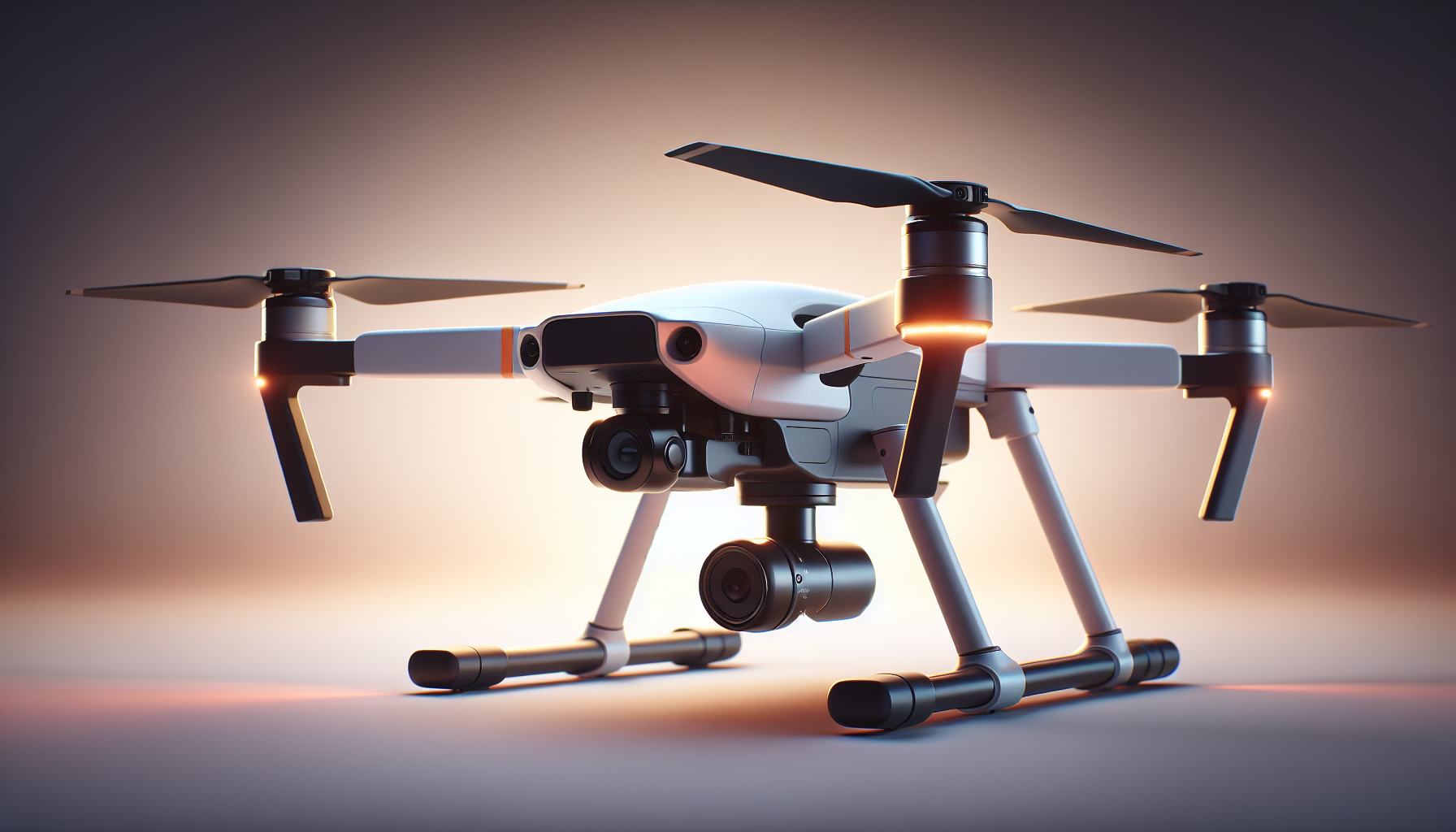
?Do we want to cover 100 hectares in ten minutes and deliver survey-ready files the same day?

Introduction
We present the WingtraRAY drone as a survey-focused aerial platform that speeds up data capture and simplifies delivery. We will explain features, workflows, sensors, safety, and practical use so we can apply the system with confidence.
What WingtraRAY is
We describe WingtraRAY as a fixed-wing VTOL drone built for professional surveys and inspections. We design it to combine long flight time, high-resolution payloads, and a single workflow that leads to CAD-ready deliverables.
Why the system matters
We want fast, reliable data capture that reduces rework and shortens project timelines. We rely on WingtraRAY to deliver more ground coverage per flight and to cut field time compared to multicopters and terrestrial methods.
Core performance highlights
We list the main performance numbers so we can compare systems quickly. The drone surveys 100 ha (250 ac) in 10 minutes, flies up to 59 minutes, and resists winds up to 27 mph.
Key selling points
We position WingtraRAY around speed, sensor flexibility, and safe operation in populated areas. We also emphasize a single connected workflow that removes file conversion and app switching.
Where the system fits
We use WingtraRAY for topographic surveys, mining volume checks, corridor mapping, construction progress, forestry, and inspection tasks. We choose the platform when we need fast capture, survey-grade accuracy, or long coverage windows.
Typical project types
We apply the drone to mapping, inspection, and monitoring. We find it useful in projects that require high detail, repeatability, and quick turnaround.
Flight efficiency and speed
We focus on speed because it lowers costs and increases job capacity. WingtraRAY flies 40% faster than WingtraOne GEN II and up to 10x faster than multicopters in coverage.
Coverage per flight
We get more ground per image with the 61 MP camera so we need fewer flights. We also use adaptive speed to match our desired output resolution and maximize coverage.
Time savings compared to other methods
We compare workflows so we can plan staffing and schedules. The drone is about 30x faster than terrestrial methods and allows same-day delivery for many jobs.
Sensors and payloads
We support six swappable sensors to cover a wide range of survey tasks. We swap sensors and batteries in seconds without tools to reduce downtime.
61 MP full-frame RGB camera
We capture more detail per image with the 61 MP camera so we can lower image overlap needs. We complete projects in fewer flights because each image covers more ground at high resolution.
LIDAR payload (overview)
We collect dense point clouds for 3D models and vegetation structure by using LIDAR sensors that fit the payload bay. We use LIDAR when we need ground points under vegetation or rapid 3D capture.
Multispectral payload (overview)
We capture multispectral bands to compute indices like NDVI for crop and vegetation health. We choose this sensor for agriculture and environmental monitoring tasks.
Thermal and inspection cameras (overview)
We image at thermal wavelengths to find heat signatures for inspections and search tasks. We use inspection cameras to capture millimeter-level detail for close-up surveys.
Adaptive speed and flight planning
We set the drone to adaptive speed so it matches the desired ground sampling distance. We plan flights in our tablet app and let the system adjust speed to optimize coverage.
Benefits of adaptive speed
We increase coverage without sacrificing resolution by letting speed vary with output needs. We reduce the number of flights and battery swaps on a job.
Setup and operations
We unpack, power on, follow the interactive checklist, and launch in under five minutes. We skip calibration for most sensors, including LIDAR, which keeps setup fast.
Pre-flight checklist
We run automated pre-flight checks and confirm battery levels and telemetry. We check the parachute status and flight plan before launch.
Swapping sensors and batteries
We remove and install sensors or batteries without tools or cables to save time. We verify secure mounts and connections before each flight.
Workflow: Field to final files
We plan the flight, fly the mission, and process data in a single workflow that keeps file formats consistent. We deliver CAD-ready files the same day in many cases.
Planning the mission
We create a mission in the tablet app with the project parameters and output requirements. We export the flight plan or run it directly from the tablet.
Data processing and deliverables
We process images and LIDAR in the included software chain and create orthomosaics, point clouds, and CAD-ready outputs. We avoid manual format conversion and app switching to reduce error.
Safety and legal readiness
We fly with peace of mind even over roads and populated areas when we add the parachute. The parachute deploys automatically or by manual trigger to protect people below.
Parachute add-on
We install the parachute to meet legal and safety demands for urban flights and BVLOS permissions. The parachute is sold separately and built for safe, predictable deployment.
Obstacle avoidance
We detect static obstacles like cranes or trees up to 100 meters ahead during cruise to add a layer of safety. We use obstacle data to avoid mid-air collisions and to keep the flight on plan.
Redundancy and fail-safes
We use a backup battery design so the drone can return home even if one battery fails mid-flight. We also run dual telemetry and onboard LTE so we stay connected if the radio link drops.
Live airspace data
We connect to live airspace data over cellular networks to identify nearby aircraft and avoid conflicts. We update our flight permissions and plans based on live traffic information.
Navigation and positioning
We use GPS and GLONASS for precise navigation and stable flight paths. We add PPK modules to achieve survey-grade accuracy in mapping deliverables.
PPK benefits
We improve ground control and reduce ground control points with PPK. We export georeferenced images and processed outputs that meet professional accuracy standards.
Flight endurance and environmental limits
We plan missions with a maximum flight time of 59 minutes per battery under typical conditions. We operate in winds up to 27 mph to keep work moving in many weather windows.
Impacts of wind and payload
We monitor wind and payload weight because both affect endurance and stability. We select flight parameters to ensure the drone returns with satisfactory battery margins.
Data quality and accuracy
We obtain survey-grade results through high-resolution sensors, PPK, and stable flight. We run automated checks to confirm data completeness before we leave the site.
Getting the right data first time
We use automated pre-flight checks and stable flight systems so we leave the site with usable data. We avoid costly rework and schedule delays by reducing the chance of missed captures.
Bundle and included items
We list the items that come with the complete bundle so we can verify contents before work. The bundle includes key accessories and software that enable field-to-final workflows.
What is included in the box
We include the drone, tablet, telemetry, batteries, chargers, tools, PPK module, and hardcase. We also include software updates and third-tier support for three years in the bundle.
| Item | Quantity |
|---|---|
| Wingtra RAY Mapping Drone | 1 |
| Tablet TabActive 3 | 1 |
| Telemetry Module (2.4 GHz) | 1 |
| Flight Battery | 2 |
| Flight Battery Charger with Dock | 1 |
| Battery Charger Cable | 1 |
| T10 Torx Screwdriver | 1 |
| USB-C/SD Adapter | 1 |
| Hardcase | 1 |
| PPK Module | 1 |
| Operating System, Apps, 3rd Tier Support (3 yrs) | Included |
| Wingtra 1 Year Limited Warranty | Included |
Technical specifications
We show the main specs so we can assess fit for our projects quickly. The drone combines a high-resolution camera, long flight time, and professional navigation features.
| Specification | Value |
|---|---|
| Camera resolution | 61 MP full-frame |
| Maximum flight time | 59 minutes |
| Navigation | GPS + GLONASS |
| Wind resistance | Up to 27 mph |
| Survey speed | 100 ha in 10 minutes |
| Obstacle detection range | Up to 100 m ahead |
| Telemetry | 2.4 GHz + Onboard LTE |
| Parachute | Optional add-on |
| Warranty | 12 months limited (bundle includes 1 year) |
Warranty and support
We explain warranty limits and available extended services so we can manage risk. The standard product warranty covers defects for 12 months, and extended services are available for a second-year warranty.
Extended service options
We examine extended warranties and support plans to keep the system operational. We link the extended warranty to reduced downtime and predictable support costs.
Regulatory considerations
We check local rules before flying and use safety features to aid approvals. We note the FAA Category 3 OOP certification as a strong point when we plan operations in the US.
Flying over people and roads
We add the parachute to meet some local requirements for flights over populated areas. We document the safety gear and operation procedures for permit applications.
BVLOS readiness
We maintain dual telemetry and LTE to support beyond visual line of sight use cases where regulations allow. We monitor airspace and connect to live traffic feeds to meet operational requirements.
Operational checklist: before flight
We give a clear list of steps so we can prepare quickly in the field. We follow a simple procedure that reduces forgot-to-do items and ensures safe flights.
- Unpack and inspect components.
- Power on drone and tablet.
- Run the interactive checklist.
- Confirm batteries and PPK module status.
- Check parachute and mounts.
- Load flight plan and verify airspace.
- Launch when checks pass.
Operational checklist: during flight
We outline checks to maintain situational awareness and data quality. We monitor telemetry, battery status, and live airspace data during missions.
- Watch telemetry and camera feed.
- Monitor battery levels and margins.
- Watch live airspace and obstacle alerts.
- Keep the tablet connection active.
- Trigger parachute manually if required.
Operational checklist: after flight
We describe simple steps to secure data and prepare for processing. We download files, confirm integrity, charge batteries, and store the system properly.
- Land and power off the drone.
- Remove and secure data storage.
- Backup images and logs.
- Inspect the airframe and sensors.
- Recharge batteries and store safely.
Data processing and software
We offer a single workflow to keep data consistent from capture through deliverables. We use the included software components and standard processing tools for orthomosaics, point clouds, and CAD files.
Processing steps
We ingest images or LIDAR data, run alignment and georeferencing, and export deliverables. We use PPK-corrected positions to tighten accuracy and reduce ground control needs.
Deliverable types
We create orthomosaics, digital surface models, digital terrain models, point clouds, and CAD-ready files. We export common formats so project teams can work with the data immediately.
Use cases and case studies
We describe practical applications so we can match the platform to project goals. We present examples for surveying, mining, agriculture, construction, and emergency response.
Mining and volumetrics
We fly stockpile surveys and compute volumes rapidly to inform operations. We deliver accurate volumes with less field time than ground crews.
Construction and site monitoring
We map construction progress regularly to update stakeholders and to detect deviations. We generate orthomosaics and 3D models that fit into BIM and CAD workflows.
Agriculture and forestry
We produce multispectral maps to assess crop health and to plan treatments. We map tree canopies and vegetation structure using LIDAR for forest inventories.
Inspections and search
We use thermal and high-resolution sensors to find hotspots and structural defects. We reduce risk by inspecting hard-to-reach areas from a safe distance.
Comparison to other systems
We compare WingtraRAY to multicopters and terrestrial methods so we can justify equipment selection. Fixed-wing VTOLs like WingtraRAY give more coverage per flight and longer endurance than typical multicopters.
Speed comparison
We achieve 10x faster coverage than multicopters and 30x faster than terrestrial methods on average. We complete larger projects in the same shift and take more jobs as a result.
Generation-to-generation gains
We show a 40% speed improvement over WingtraOne GEN II for many workflows. We switch to WingtraRAY to gain time savings and improve throughput.
Maintenance and care
We outline basic maintenance tasks to extend system life and to reduce failures. We clean sensors, inspect airframe, update firmware, and follow battery care best practices.
Regular checks
We inspect propellers, verify sensor mounts, and test telemetry links before flights. We perform firmware updates and record maintenance activities.
Battery care
We store batteries at recommended charge levels and avoid deep discharges. We follow the manufacturer guidelines for charging cycles to preserve capacity.
Cost considerations
We analyze how speed and accuracy influence project economics so we can plan investments. We consider the initial cost, support plans, and the reduced operational hours when we calculate ROI.
Return on investment
We increase job throughput and reduce field labor when we use WingtraRAY. We estimate payback from the combination of time savings and fewer rework cycles.
Practical tips for efficient surveys
We give concrete steps that help us run the system well in day-to-day work. We keep flight plans simple, update firmware before major jobs, and stage batteries for continuous operations.
- Plan missions when wind is lower for best image quality.
- Use the largest sensor that meets resolution needs to minimize flights.
- Keep the tablet fully charged and synced with the drone.
- Review sample images on site before packing up.
Frequently asked questions (FAQ)
We answer common questions to reduce uncertainty before purchase and before flights. We keep answers concise and focused on actions.
How fast can we map 100 ha?
We can map 100 ha in around 10 minutes under suitable conditions with the 61 MP camera and optimal flight settings. We must also allow time for takeoff, landing, and battery swaps.
Does the system need ground control points?
We can reduce ground control needs by using the PPK module to increase georeferencing accuracy. We still use ground control points when project specifications require independent checks.
Is the parachute required?
We add the parachute when we plan flights over people, roads, or urban areas to meet safety and permit requirements. The parachute is optional but recommended for risk reduction.
How long does setup take?
We set up and launch in under five minutes in routine conditions because no calibration is required for most sensors. We add time for complex missions or for setting up external ground control if needed.
What support options are available?
We include one year limited warranty in the bundle and provide extended service options for additional coverage. We contact manufacturer support for repairs and firmware issues.
Final assessment and recommendations
We conclude that WingtraRAY fits teams who need fast, accurate survey data with minimal field time. We recommend the system for organizations that need long endurance, high-resolution capture, and a single connected workflow.
Who should consider WingtraRAY
We advise survey companies, mining firms, construction teams, and large agricultural users to evaluate WingtraRAY. We consider the system especially valuable when we need to scale operations and deliver results quickly.
Next steps for adoption
We outline a simple plan to adopt the system so we can start delivering results. We suggest trial projects, operator training, and workflow integration with existing software tools.
- Run a pilot project to validate accuracy and throughput.
- Train operators on the interactive checklist and emergency procedures.
- Integrate processed deliverables into client workflows and systems.
Closing note
We summarize that WingtraRAY offers speed, sensor flexibility, and a safety-focused design that supports urban and BVLOS work. We plan missions with confidence when we use the system and we deliver high-quality, survey-grade results to our teams.
WingtraRAY drone