

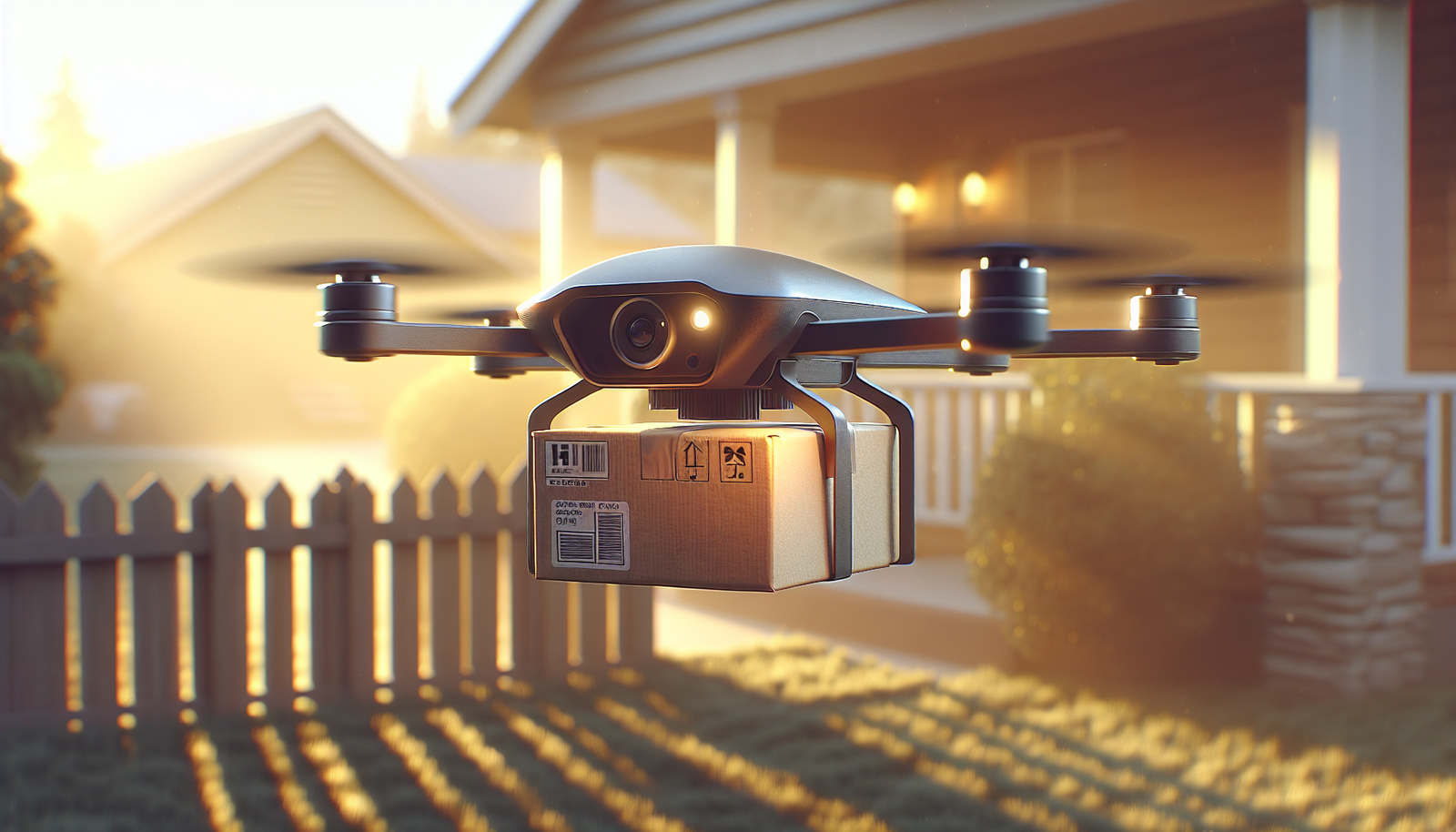
Have we ever watched a parcel drone and wondered what else it carries besides the package?
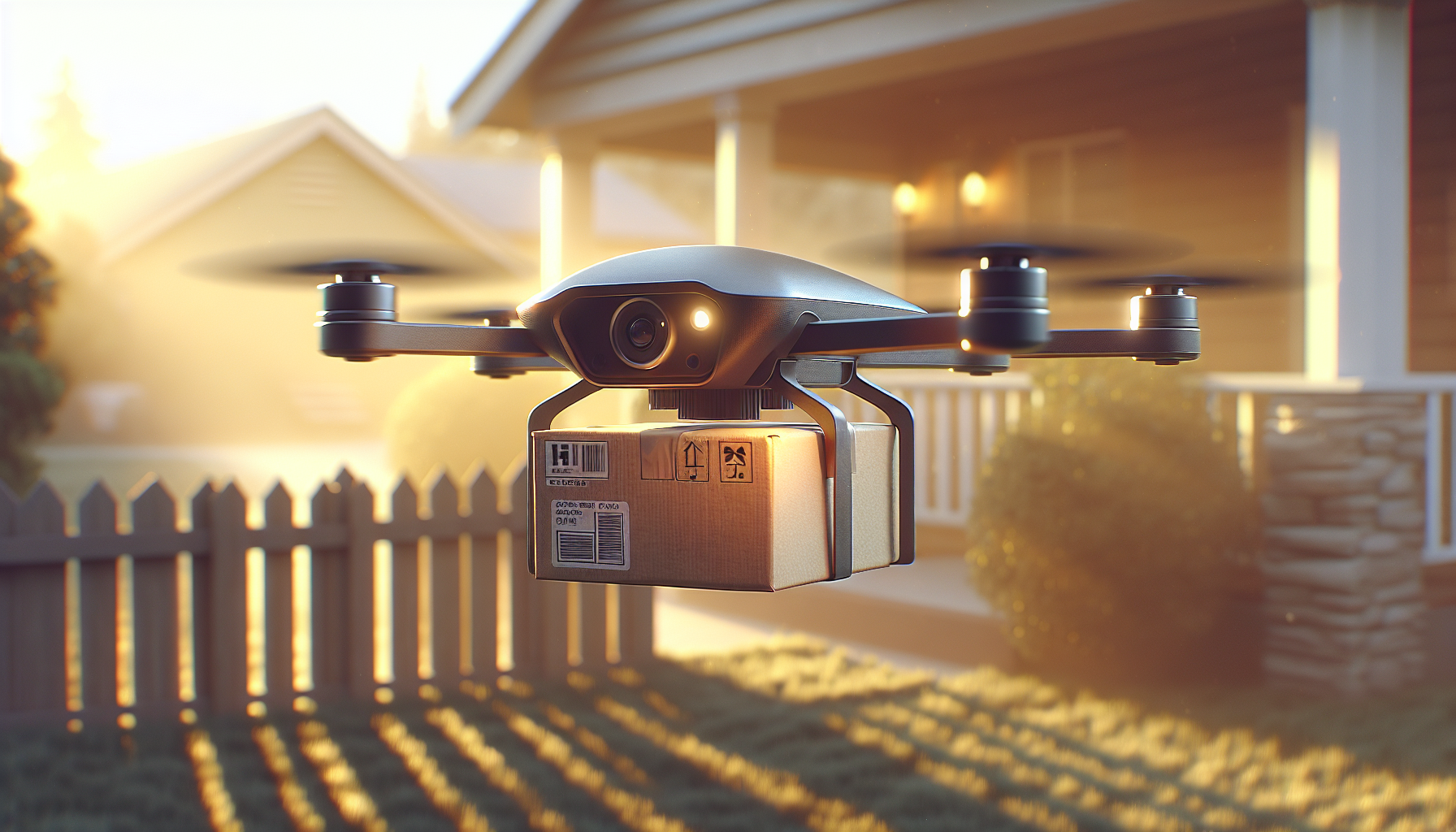
Parcel drone delivery brings the mail and my neighbor’s gossip
We write about drones in the street. We write about the mail in our hands and the gossip in the air. We watch the drone land on the porch. We listen when it hovers close to a balcony. We notice what people say afterward.
Why this matters to us
We live in neighborhoods with new machines in the sky. We read about faster delivery and lower costs. We also hear new kinds of rumor and scrutiny. We will look at both the technical facts and the social effects. We will keep language clear and sentences direct.
How parcel drone delivery works
We explain the basic system first. We break the process into steps that match how companies build and run delivery services.
Order and dispatch
A customer places an order online. A logistics platform receives the order. The platform assigns the order to a drone or to a human carrier. The system plans the route and sets the flight time.
Drone preparation
Ground staff load the package into a compartment. The drone checks its battery and sensors. The drone runs a safety check before it starts the flight.
Flight and positioning
The drone lifts off and travels to the delivery zone. It uses GPS and sensors to keep its path. It adjusts height to avoid obstacles and to follow rules.
Delivery and return
The drone descends to a drop zone or a landing pad. It releases the package or hands it to a recipient. The drone returns to a base or to a charging station.
Key technologies in parcel drones
We list the main tools that drones need. We keep each description short and clear.
GPS and positioning systems
Drones use GPS to find a location. They use additional sensors to improve accuracy. They combine data from cameras and lidar to avoid collisions.
Navigation and control software
Software steers the drone from takeoff to landing. It calculates routes and avoids no-fly zones. It sends telemetry back to the operator.
Sensors and obstacle detection
Cameras detect people and objects. Ultrasonic sensors measure distance to close objects. Lidar creates a map of the drone surroundings.
Battery and power management
Batteries power the drone motors and electronics. The system monitors battery health and remaining charge. The software forces a return when the battery level falls past a set point.
Payload and release systems
Drones carry packages in a bay or under a hook. Release mechanisms drop or lower packages. Systems lock loads to prevent accidental drops.
Regulations and safety rules
We outline the regulatory landscape in plain terms. We show common rules that governments apply.
Airspace rules and permissions
Authorities set where drones may fly. They require registration of many drones. They may require remote identification of each aircraft.
Line-of-sight and beyond-visual-line-of-sight (BVLOS)
Many rules require the pilot to keep the drone in sight. Some plans allow flights beyond visual range. Authorities grant special permits for BVLOS under conditions.
Altitude and speed limits
Regulators set maximum altitudes. They also set speed limits in some areas. These rules reduce risk to people and buildings.
Privacy and data rules
Agencies protect personal data and images. They limit video recording in private spaces. They also require notification in some cases.
Safety and certification
Manufacturers test drones for safety. Operators must show training and insurance. Regulators require checks before a service goes live.
Noise, nuisance, and social impact
We discuss how drone flights change neighborhood sound and feeling. We write about what people tell us when they notice frequent flights.
Noise from rotors and engines
Drones make a constant hum or buzz. The noise varies by size and motor type. People may find the sound distracting when flights occur often.
Visual intrusion and presence
Drones cross the sky in visible paths. They land on lawns and roofs. People notice the machines and they react in different ways.
Perceived surveillance and privacy
People often feel watched when drones fly near windows. Cameras on drones raise concern even if the operator records only delivery footage. We explain how fear can spread faster than facts.
Gossip and social talk
Neighbors comment on drone activity in the street. People compare sightings and speculate about who ordered what. We describe the way talk moves through a block and changes how people behave.
The neighborhood social dynamic
We relate how drone delivery changes how neighbors interact. We keep observations direct and grounded.
New topics at the fence
People comment on the newest model and its sound. People ask whether the drone will take photos. Conversations focus on risk and convenience.
Trust and suspicion
Some residents welcome faster deliveries. Others worry about privacy and safety. We see trust shift when a drone service starts frequent flights.
Shared spaces and conflict
Drones use sidewalks, yards, and shared green space. They can cause disputes over where to land and how to secure packages. We suggest clear rules to avoid tension.
Privacy concerns and what we can do
We describe concrete steps residents and operators can take. We keep the recommendations practical and small in scope.
What residents can do
We check local laws and project plans. We ask providers about camera use and data retention. We set clear expectations with neighbors and carriers.
What operators can do
Operators limit camera angles and blur faces in footage. They provide clear delivery windows and drop points. They adopt flight paths that avoid close passes by windows.
Community agreements
Neighbors agree on preferred landing areas. They set hours when deliveries are ok. They communicate concerns to the operator in writing.
Case examples
We present examples to show how real deployments look. We avoid naming many brands to keep the focus on practical effects.
Suburban delivery pilot
A company ran a pilot in a suburban area. The service delivered grocery items in 20 minutes. Residents praised the speed and complained about the noise.
Urban rooftop scheme
A service used building rooftops in a dense city. They set fixed landing pads on roofs. People on balconies felt less disturbed. Tenants below felt uneasy when flights came low.
Rural long-range route
A parcel service used long-range drones to reach remote homes. The flights cut delivery time dramatically. Farmers appreciated the convenience and reported few privacy concerns.
Safety incidents and lessons
We cover typical kinds of incidents and what they teach us. The tone stays factual and direct.
Loss of control and hard landings
Drones can lose GPS or fail a motor. A failed component can cause a fall. Operators plan safe landing zones and require redundancy.
Package drops and theft
A dropped package can sit in a yard unnoticed. Thieves can take visible items. Operators use secure release mechanisms and tracking to reduce theft.
Near-misses with people and animals
Drones can scare pets. People can feel startled if a drone passes close by. Teams train to avoid low passes near animals and people.
Data exposure
Footage from drones can leak if systems lack security. Operators encrypt video and limit access. Regulators push for stronger data protections.
Design choices that matter
We outline which design features help reduce nuisance and improve safety. We present choices in clear statements.
Quieter motors and propeller design
Designers choose motors and propellers that reduce noise. They test noise at ground level. Quieter machines lower neighborhood annoyance.
Precise landing and package handling
Better sensors improve landing accuracy. Reliable release systems decrease the need to hover near homes. Precision reduces time overhead and disturbance.
Data minimization
Operators collect only necessary data. They avoid high-resolution images of private property when not needed. They delete footage after a short retention period unless an incident requires otherwise.
Secure communication
Drones use encrypted links for command and control. Operators protect telemetry and video feeds. They log access to records for audits.
Rules of etiquette for neighbors and operators
We suggest simple norms to reduce friction. We keep rules short and actionable.
- Operators announce scheduled delivery times to residents.
- Neighbors set clear drop zones and mark them.
- Operators avoid flights near windows unless the resident requests.
- Residents do not intentionally startle or interfere with drones.
- Both sides report incidents promptly.
Economic and environmental impact
We break down the potential economic and environmental effects. We keep the points clear and direct.
Cost and speed
Drones can lower last-mile costs for small, light packages. They speed up short-range deliveries. They may not replace trucks for heavy or bulky goods.
Table: Cost and delivery profile comparison
| Delivery method | Typical package size | Average speed in neighborhood | Typical cost per parcel (relative) |
|---|---|---|---|
| Door-to-door van | Large | Moderate | High |
| Bicycle courier | Small to medium | Moderate | Medium |
| Parcel drone | Small | Fast | Low to Medium |
Energy use and emissions
Electric drones use battery power. They avoid tailpipe emissions that trucks create. The net benefit depends on battery production and charging source.
Job shifts
Drones reduce some manual delivery work. They create roles in drone operations, maintenance, and software. We expect a shift rather than a simple loss of jobs.
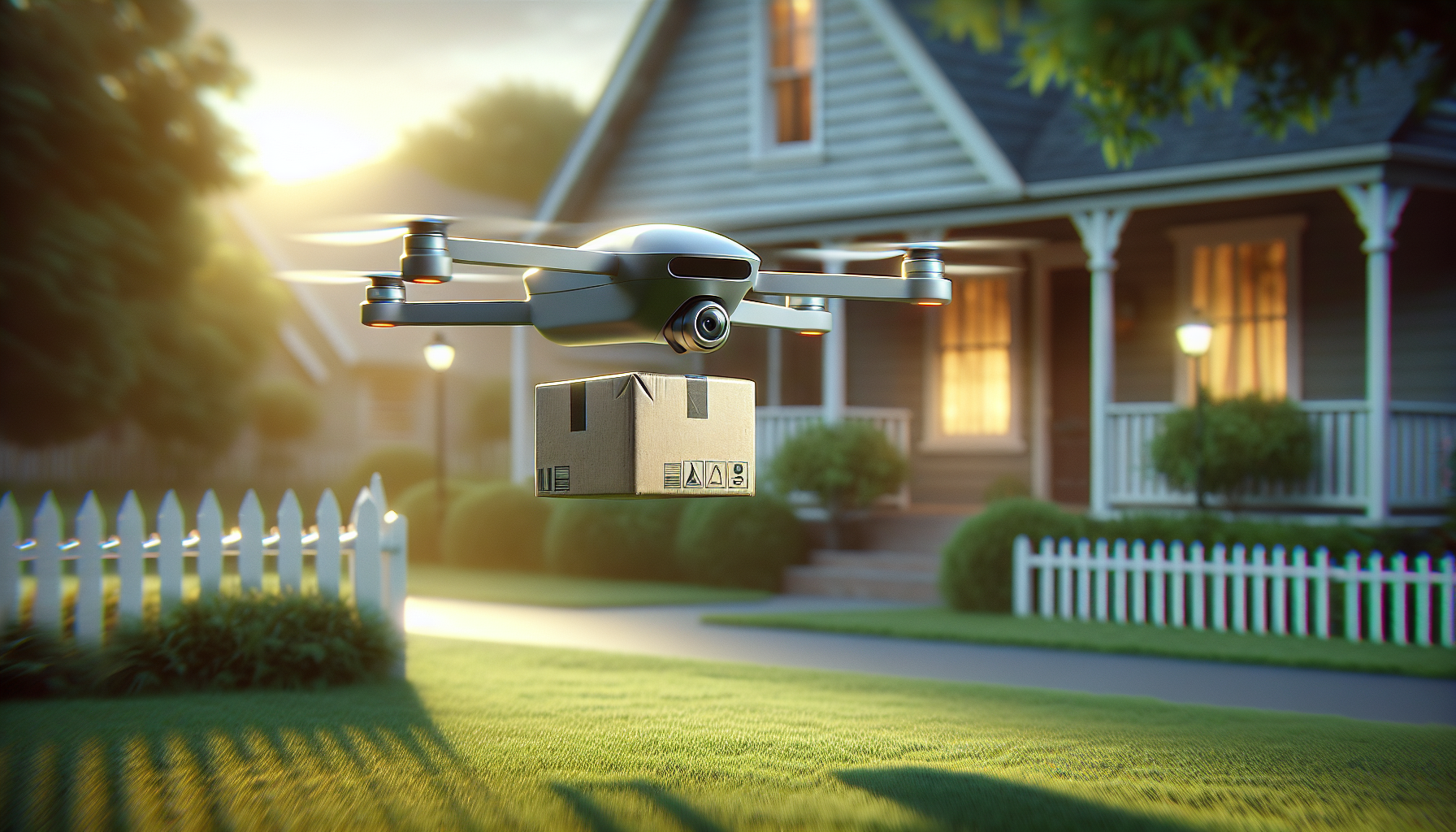
Technical challenges still ahead
We explain the main technical hurdles in plain terms. We describe what teams must solve before broad rollout.
Battery energy density
Batteries limit how far and how long drones can fly. Teams work on battery chemistry and lighter structures. They balance weight, safety, and cost.
Reliable BVLOS operation
Long-range flights need reliable detection and avoidance. Operators build systems to sense other aircraft and obstacles. Regulators often require proof before permission.
Weather resilience
Heavy wind, rain, and snow challenge drone flight. Operators must design systems to handle variable weather. They also plan ground fallback options.
Scalability of air traffic management
Many drones in the sky need traffic rules. Systems must coordinate hundreds or thousands of flights. Developers design digital frameworks to assign routes and timing.
How neighborhoods can prepare
We give a practical checklist for communities that expect drone services. We keep items short and clear.
- Hold a community meeting with operators.
- Agree on common landing areas.
- Map no-fly zones for sensitive areas.
- Request a privacy policy and data retention schedule.
- Set an incident reporting contact and response time.
Common myths and facts
We clear up misunderstandings with short statements. Each entry pairs a myth with a fact.
- Myth: Drones will spy on every window. Fact: Most delivery drones record minimal footage and focus on safe landing.
- Myth: Drones will replace all delivery jobs. Fact: Drones change roles and create new jobs in operations and maintenance.
- Myth: Drones are silent. Fact: Drones make noise but design improvements can reduce it.
- Myth: Drones will flood the sky immediately. Fact: Regulators and operators stage rollouts and limit numbers.
Practical tips for residents
We give short, actionable steps that residents can use to live with drone delivery.
- Mark a clear and safe drop zone in the yard.
- Keep pets inside during scheduled deliveries.
- Report low or unsafe flights to the operator.
- Ask the operator about camera use on your block.
- Share feedback with your local council or regulator.
Ethical issues we must consider
We state core ethical questions in plain language. These questions guide policy and design.
Consent and informed notice
People need notice about deliveries that use cameras near their homes. Operators must explain what they record and why. Residents must have the right to object or to set rules.
Equity of access
Drones may serve some neighborhoods first. Wealthier areas may see faster deployment. We must plan to include rural and low-income areas.
Liability and responsibility
When a drone causes harm, someone must take responsibility. Manufacturers, operators, and insurers share the duty to fix harm. Laws must clarify who pays and who responds.
The future we can picture
We offer a clear vision of likely near-term outcomes. We keep descriptions concrete.
We will see more parcel drones for light goods in suburbs and rural areas. We will see cautious trials in cities with fixed landing pads. We will see better noise control and more secure data systems. We will also see community rules evolve to limit unwanted passes by windows.
Questions regulators and companies will ask
We list practical questions that teams face every day. These help people plan and assess projects.
- How close can drones fly to private homes?
- What cameras do we need to ensure safe landings?
- How long will companies keep video and telemetry?
- How will we respond to complaints or accidents?
- How do we measure noise impacts and set limits?
Table: Common stakeholders and their main interest
| Stakeholder | Main interest |
|---|---|
| Residents | Privacy, safety, quiet, reliable delivery |
| Operators | Efficiency, compliance, customer satisfaction |
| Regulators | Safety, public interest, legal clarity |
| Local councils | Community impact, zoning, complaints |
| Insurers | Risk assessment, liability limits |
| Manufacturers | Performance, cost, certification |
Short guide to a community meeting
We give a simple agenda that neighborhoods can use. The list helps groups get clear outcomes.
- Introductions and goals. Keep the meeting short and focused.
- Operator presentation. Ask for routes, hours, and camera policy.
- Resident concerns. Let people list privacy and safety worries.
- Draft landing and no-fly map. Draw simple proposed zones.
- Agreement on communication. Set a contact person and response times.
- Next steps. Schedule a follow-up and require operator updates.
Balancing convenience and social cost
We state the trade-off plainly. We do not romanticize either side.
Drones offer fast delivery and lower costs for small items. Drones also change how people feel about their private space. We must weigh speed against noise and perceived surveillance. We must make choices that protect quiet and privacy while letting useful services operate.
Final notes on community action
We suggest a simple action plan that residents can adopt. We keep the plan short and practical.
- Read the operator privacy policy and ask questions.
- Propose a limited trial period and set criteria to end the trial.
- Collect neighbor feedback and forward it to regulators.
- Encourage the operator to test quieter designs and secure data handling.
- Use local government channels to make permanent rules.
Conclusion
We look up when we hear the drone. We look for the parcel and for the meaning of the flight. We accept that the sky above our homes will change. We ask for clear rules, for quiet motors, and for respectful routes. We ask for data limits and for rights to say no. We want convenience and calm. We want to receive a package without losing our sense of privacy. We want to live in a street where the mail arrives and the gossip stays human.