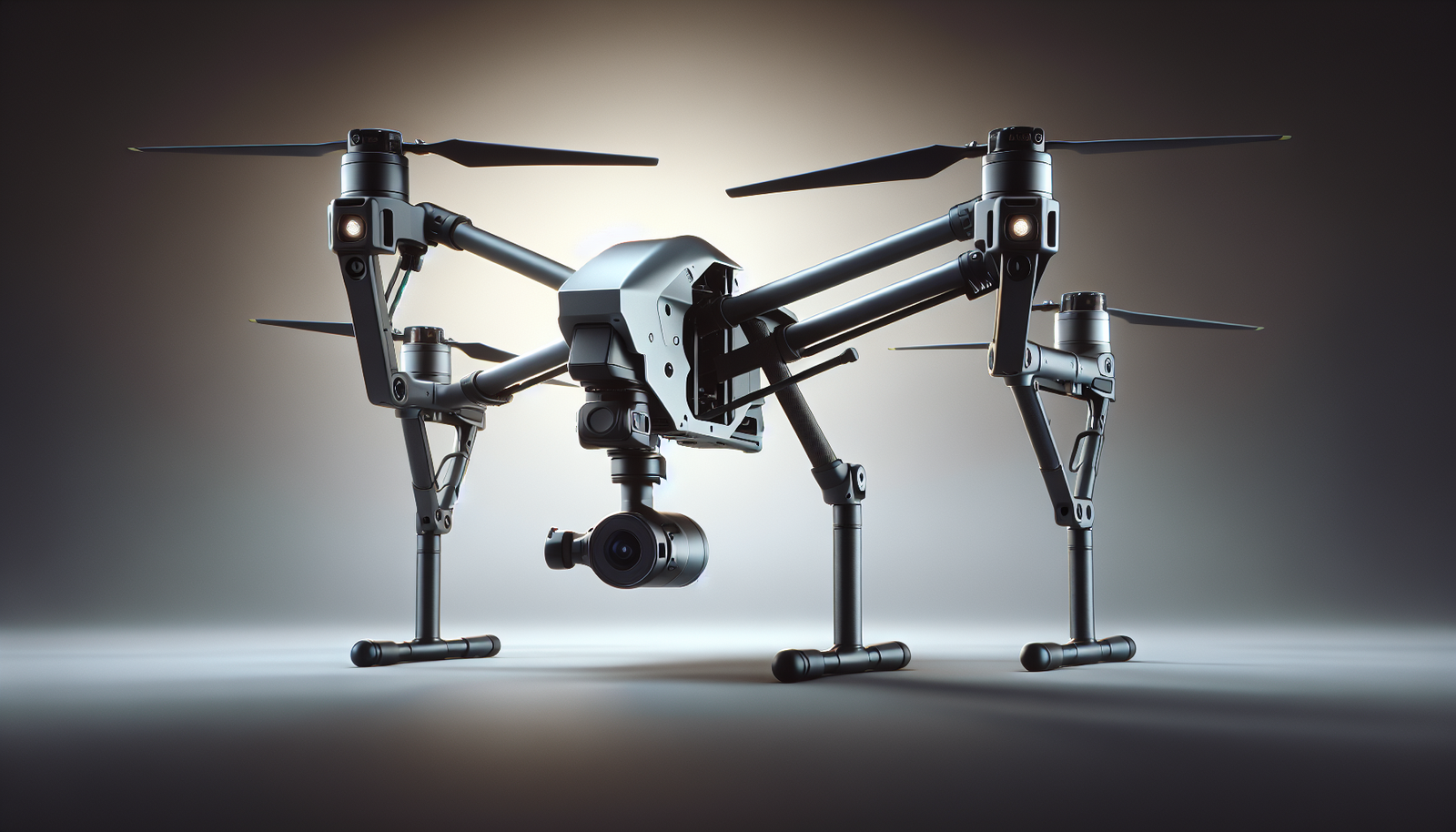
Product: DJI Matrice 4E Drone, Bundle with 4x WB37 Battery, D-RTK 3 GNSS Multifunctional Station, Terra Mapping and Pix4Dmatic Software
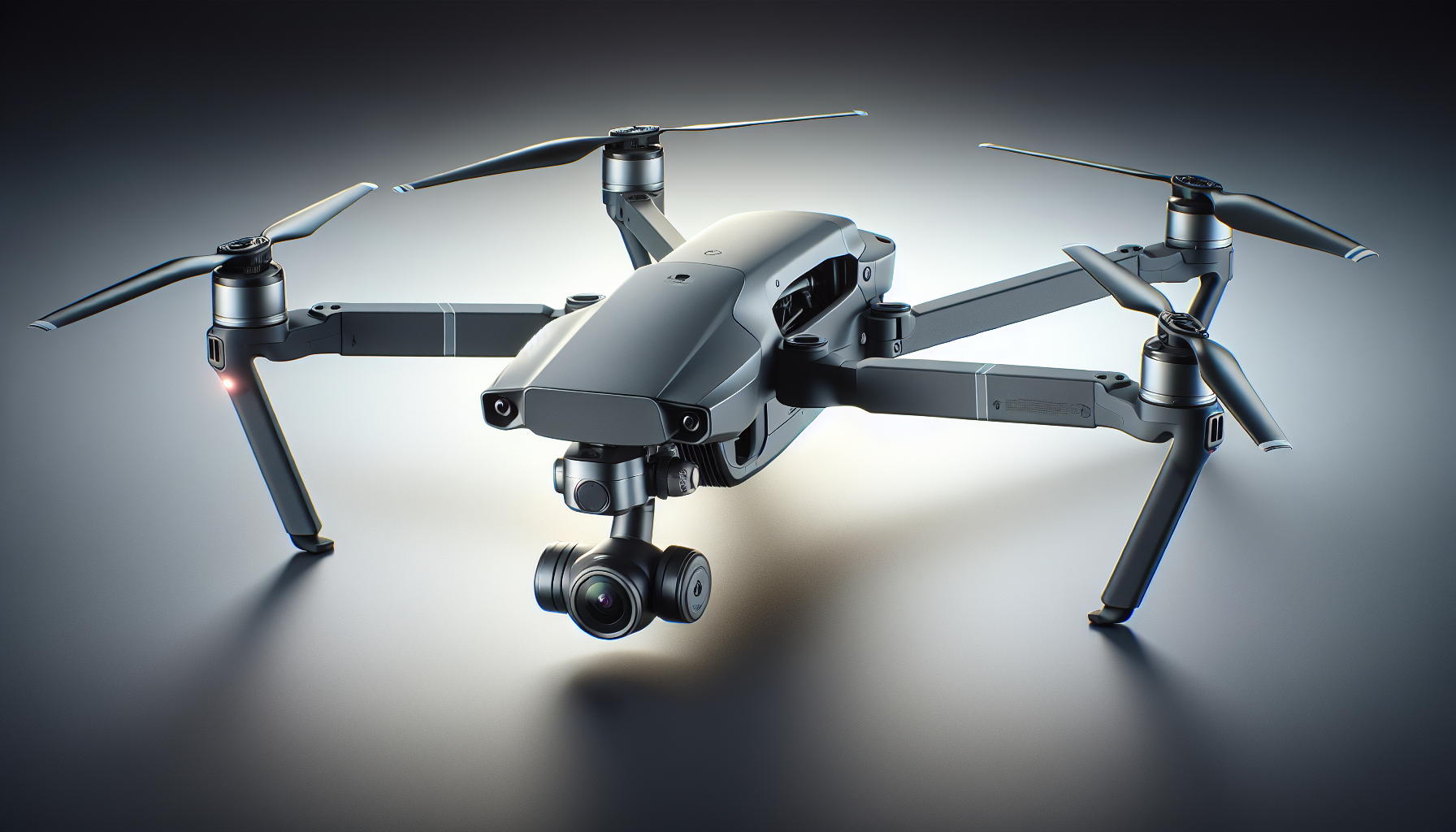

Product Overview
You’re looking at an enterprise-grade aerial mapping and inspection package built to get teams from data capture to deliverables with minimal friction. The DJI Matrice 4E Drone Bundle combines the Matrice 4E airframe with extended-power batteries, a high-precision GNSS base station, and two industry-leading processing suites (DJI Terra and Pix4Dmatic). That combination positions the bundle as a turnkey solution for surveying, construction monitoring, infrastructure inspection, environmental assessment, and public safety tasks.
This review breaks down capabilities, real-world performance, workflow recommendations, pros and cons, and value considerations so you can decide whether this bundle fits your operational needs.
What’s Included
Physical and software contents
- DJI Matrice 4E drone (enterprise platform)
- 4 × WB37 batteries for extended mission time
- D-RTK 3 GNSS Multifunctional Station for precise positioning
- DJI Terra Mapping software (license included)
- Pix4Dmatic photogrammetry software (license included)
Quick-use summary
The package is designed so you can capture reliable georeferenced imagery and generate high-quality orthomosaics, DEMs, point clouds, and textured 3D models largely out of the box. The extra batteries reduce mission downtime; the D-RTK 3 station raises geolocation accuracy; Terra + Pix4Dmatic provide complementary processing paths—Terra for integrated DJI workflows and Pix4Dmatic for heavy-duty point-cloud and photogrammetry tasks.
Key Specifications (at-a-glance)
| Component | Key details |
|---|---|
| UAV platform | DJI Matrice 4E (enterprise-grade, weather-resistant airframe) |
| Batteries | 4 × WB37 (extended mission runtime per charge compared to base pack) |
| GNSS station | D-RTK 3 GNSS Multifunctional Station (RTK corrections, high-precision georeferencing) |
| Software | DJI Terra Mapping; Pix4Dmatic photogrammetry |
| Typical deliverables | Orthomosaics, DEMs/DTMs, dense point clouds, textured 3D models |
| Primary use cases | Surveying, construction, inspections, environmental monitoring, emergency response |
| Target users | Surveyors, GIS teams, engineering/contracting firms, public safety agencies |
Design and Build Quality
Airframe and durability
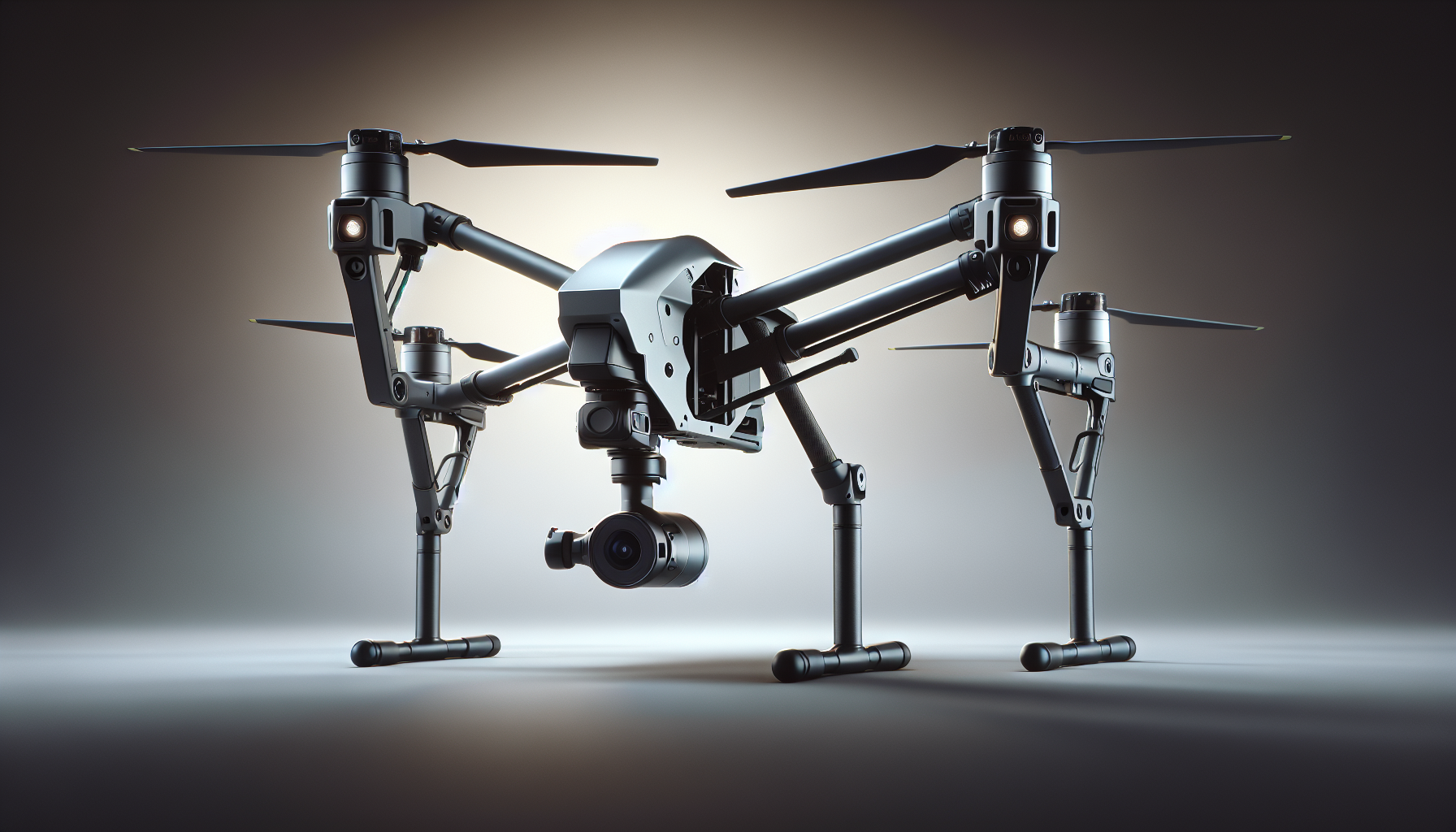
You’ll find the Matrice 4E built to withstand professional field use. The chassis, gimbal mounts, and landing gear use robust materials with a practical layout for sensor integration and payload mounting. The aircraft is designed for enterprise reliability—weather sealing and component redundancy mean you can operate with more confidence in marginal conditions than with consumer drones.
Payload flexibility
The Matrice 4E is engineered to accept a range of sensors and cameras. If your workflows require multispectral, LiDAR, or higher-resolution optical payloads, the platform provides the interfaces and mechanical stability to support those options. You’ll appreciate the modular approach when swapping sensors or upgrading hardware for specialized missions.
Flight Performance and Batteries
Flight characteristics
The Matrice 4E delivers stable, predictable flight behavior suitable for precision mapping and inspection tasks. It maintains steady hover for high-quality imagery capture and supports flight planning tools that automate grid missions and inspection routes. You’ll get smooth gimbal stabilization and responsive controls, which are essential for consistent photo overlap and accurate photogrammetry.
WB37 battery performance
Including four WB37 batteries is a practical decision for field operations. Each battery extends single-flight duration relative to standard packs, and having four available means fewer mission interruptions for recharging. In real-world terms, you can expect to fly more contiguous hectares per day, which increases site productivity and reduces logistics complexity when multiple sites or long survey lines are required.
Tips:
- Rotate batteries to manage thermal stress—use warm batteries to start and allow recently used batteries to cool.
- Monitor cell health and cycle counts; enterprise batteries deliver the best ROI when maintained properly.
GNSS Accuracy: D-RTK 3 Station
Precision georeferencing
The D-RTK 3 GNSS Multifunctional Station boosts positional accuracy dramatically compared to standalone GNSS on the drone. You’ll benefit from RTK-level correction streams that cut geolocation errors down to centimeter-level when properly configured and tied to surveyed control points or local networks.
Practical use
Set the D-RTK 3 up on a stable tripod and ensure clear sky view for optimal satellite visibility. The station supports multiple correction transmission modes—radio, Wi‑Fi, or network—so you can choose the best method depending on site conditions and range. When you pair the Matrice 4E with the D-RTK 3, you’ll reduce the need for dense ground control point (GCP) placement, accelerating survey workflows and reducing on-site labor.
Caveats:
- RTK performance depends on baseline distance and satellite visibility; plan for occasional post-processing/PPK if RTK corrections are intermittent.
- For the highest absolute accuracy (e.g., cadastral work), retain some GCPs to validate results.
Software: DJI Terra and Pix4Dmatic
DJI Terra
DJI Terra is tightly integrated with DJI flight ecosystems, making it straightforward to move from mission planning to data capture and processing. You’ll appreciate mission templates, automatic flight path optimization, and quick orthomosaic generation. Terra is useful for creating quick deliverables and for teams that prefer a unified DJI workflow.
Strengths:
- Seamless integration with DJI telemetry and metadata
- User-friendly interface for mission setup and progress tracking
- Efficient orthomosaic generation for small-to-medium datasets
Limitations:
- For very large-scale point cloud generation or highly complex photogrammetry tasks, Terra may be less flexible than specialized tools.
Pix4Dmatic
Pix4Dmatic is designed for large datasets and produces highly accurate, dense point clouds and 3D reconstructions. It excels when you process thousands of high-resolution images, benefiting top-tier photogrammetric outcomes.
Strengths:
- Scales to very large projects (millions of images)
- Excellent control over point cloud generation and filtering
- Strong export options and integration with GIS/CAD workflows
Limitations:
- Steeper learning curve than Terra; requires more processing resources
- Licensing and hardware demands may be higher for extensive projects
Complementary usage
Use Terra for rapid initial assessments and Pix4Dmatic for final deliverables that require maximum accuracy and detail. You can run a quick Terra orthomosaic in the field to check coverage and later process the full dataset in Pix4Dmatic for final deliverables.
Data Capture Workflow
Planning
You’ll start by defining ground coverage, desired ground sample distance (GSD), and flight altitude. Choose overlap and sidelap percentages according to photogrammetry best practices—typically 70–80% front overlap and 60–70% side overlap for mapping tasks. Include oblique imagery or additional passes for facades and vertical structures if you’ll create textured 3D models.
On-site setup
- Deploy the D-RTK 3 station on a stable mount and acquire corrections.
- Place a small number of GCPs if project specs require absolute validation—mark them with high-contrast targets for ease of identification in images.
- Verify battery charge levels and assign a battery rotation plan to maximize continuous flight time.
- Run preflight checks on sensors, gimbal calibration, and compass data.
Capture
Follow planned flight lines using the Matrice 4E’s mission planner. You’ll want to monitor telemetry and image capture to ensure consistent exposure settings and to avoid motion blur. Keep an eye on environmental factors—wind, sun angle, and feature shadows can affect photogrammetry quality.
Post-flight
- Offload images and telemetry logs
- Apply RTK/PPK corrections or include D-RTK metadata in processing
- Run a rapid Terra check to confirm coverage, then move full dataset to Pix4Dmatic for final processing if required

Deliverables and Output Quality
Orthomosaics and DEMs
With proper mission planning and D-RTK integration, you’ll produce orthomosaics with high spatial accuracy and consistency. DEMs generated from the Matrice 4E imagery are suitable for volume calculations, cut-and-fill analysis, and site elevation modeling—again, accuracy scales with GSD, RTK corrections, and ground control density.
Dense point clouds and 3D models
Pix4Dmatic excels at dense point-cloud generation; you’ll get highly detailed models for asset inspection, structural monitoring, and as-built documentation. Textured 3D meshes from combined oblique and nadir imagery will be photorealistic if lighting conditions and camera calibration are consistent.
Accuracy expectations
- With RTK/PPK and moderate GCP use: centimeter-level relative accuracy is achievable.
- Without RTK and minimal GCPs: typical drone photogrammetry accuracy will be in the decimeter range, which may be sufficient for some monitoring and inspection tasks.
Use Cases and Industry Fit
Surveying and mapping
If you’re responsible for topographic surveys, corridor mapping, or site monitoring, this bundle gives you the tools to collect georeferenced datasets efficiently. The Matrice 4E platform plus D-RTK 3 reduces GCP needs and speeds up repeatable surveys.
Construction monitoring
You’ll be able to produce frequent orthomosaics and DEMs for progress tracking, earthworks verification, and volumetric calculations. The extra batteries let you complete larger areas per day, which is critical on fast-moving construction sites.
Infrastructure inspection
For utilities, bridges, towers, and pipelines, you’ll want high-resolution imagery and precise positional data. The Matrice 4E supports inspection payloads and provides steady flight performance for close-in visual tasks. Use Pix4Dmatic to produce dense point clouds for structural assessment.
Environmental assessment and emergency response
The platform is useful for habitat mapping, shoreline surveys, and situational awareness during incidents. Rapid processing with Terra helps in time-sensitive scenarios; follow-up detailed mapping in Pix4Dmatic supports forensic or restoration work.
Pros and Cons
Pros
- Turnkey: everything needed for capture, positioning, and processing is in the bundle.
- Extended operational time: four WB37 batteries reduce downtime and let you cover more area per deployment.
- High positional accuracy: D-RTK 3 meaningfully improves georeferencing and can reduce GCP needs.
- Dual software paths: Terra for integrated DJI workflows; Pix4Dmatic for advanced photogrammetry and large datasets.
- Enterprise-grade platform: Robust build, payload flexibility, and sensor compatibility.
Cons
- Cost: enterprise bundles are a significant investment; evaluate ROI based on project cadence and billable deliverables.
- Software learning curve: Pix4Dmatic requires more technical know-how and powerful hardware for large projects.
- RTK dependence: while D-RTK 3 is powerful, field conditions (signal obstructions, very long baselines) may still require supplementary GCPs or post-processing.
- Weight and transport: enterprise drones and accessories are bulkier and need proper logistics planning.
Practical Tips for Getting the Most Out of the Bundle
Pre-deployment checklist
- Verify battery health and firmware versions on all components.
- Ensure the D-RTK 3 firmware and configuration match the Matrice 4E RTK settings.
- Preload mission plans and confirm SD card capacities.
- Print or place a small number of GCPs for validation if the project demands absolute accuracy.
Mission settings and camera configuration
- Use manual camera exposure or lock histogram/ISO to prevent frame-to-frame exposure variation.
- Choose flight altitude and GSD based on deliverable accuracy requirements—higher resolution (lower altitude) increases processing time and storage needs.
- Include overlap redundancy (higher overlap on complex terrain) to improve tie-point matching.
Battery and logistics management
- Create a rotation schedule for the four WB37 batteries to keep mission predictability high.
- Pack a portable charging station or vehicle inverter for multi-day operations.
- Track battery cycle counts and replace cells before performance drops significantly.
Processing workflow
- Do an initial Terra run for coverage validation and quick orthomosaic checks.
- Use Pix4Dmatic for final dense point clouds and high-accuracy deliverables; split very large projects into blocks if hardware limits require it.
- Archive raw images, telemetry logs, and processed outputs with metadata for traceability.
Maintenance, Support, and Compliance
Maintenance
Regular inspections and maintenance are essential: check propellers, motors, gimbal calibration, and battery health. Keep firmware up to date, but validate new releases in a controlled environment before field deployment to avoid unexpected behavior mid-project.
Support
DJI’s enterprise support channels and authorized service centers are available in many regions. Factor in local support availability when purchasing, especially if you’re operating in remote areas or high-utilization contexts.
Regulatory compliance
You’ll need to follow local aviation regulations for UAS operations—this can include pilot certification, airspace authorization, and operational limits. Because you’ll likely be operating in controlled environments (construction, critical infrastructure), confirm insurance and data protection policies before collecting sensitive imagery.
Pricing and Value Considerations
Upfront cost vs operational value
Enterprise bundles are an investment. You’ll want to compare the bundle price against:
- Current cost of existing hardware and upgrades
- Productivity gains from fewer mission interruptions and faster processing
- Reduced need for extensive GCP surveys when using D-RTK 3
- Potential to win higher-value contracts because you can deliver more accurate, professional-grade outputs
Licensing and recurring costs
Factor in licensing for Pix4Dmatic and any subscription services for GNSS corrections if you plan to use network RTK instead of the D-RTK 3 radio transmission. Also include software maintenance, cloud processing credits (if applicable), and periodic hardware replacements.
Return on investment (ROI)
You can justify the bundle by quantifying:
- Time saved per survey (fewer GCPs, faster flights, quicker processing)
- Increased billable area per day thanks to the extra batteries
- Higher contract rates for certified, high-accuracy deliverables
Comparison to Alternatives
When you compare this bundle to alternatives (separate drone purchases, third-party RTK systems, standalone software), the key advantages are integration and reduced setup complexity. If you already have an equivalent GNSS base station or photogrammetry pipeline, you may not need the complete bundle. However, if you’re building a repeatable, traceable mapping capability from scratch, the integrated approach reduces the number of moving parts and shortens the learning curve for teams.
Real-World Scenarios and Workflow Examples
Example 1 — Construction site monthly monitoring
You arrive on-site with the Matrice 4E and set up the D-RTK 3 station. Two battery swaps and a single morning session allow you to map the whole site at 3–5 cm GSD. You run a quick Terra orthomosaic to confirm coverage and later process the full dataset in Pix4Dmatic to produce a DEM for cut/fill calculations. You deliver the orthomosaic and elevation map to the site team the same day and the high-accuracy point cloud within 24–48 hours.
Example 2 — Utility corridor inspection
You use oblique passes for tower faces and nadir flights for corridor coverage. The Matrice 4E stable platform ensures consistent overlap and image sharpness. Pix4Dmatic processes long linear datasets into dense point clouds for defect analysis. D-RTK 3 minimizes reliance on GCPs in remote terrain, enabling faster mobilization.
Example 3 — Emergency response mapping
Rapid orthomosaic generation with DJI Terra gives first responders an immediate overview of impact zones. Follow-up Pix4Dmatic processing provides more detailed 3D models for reconstruction and insurance assessments.
Prospective Improvements and Considerations
- Consider adding a dedicated fast charger and a battery management system to optimize the WB37 lifecycle and maximize uptime.
- If you’ll process very large datasets in-house, invest in high-core-count CPUs, abundant RAM (64–256 GB depending on scale), and GPU acceleration to shorten Pix4Dmatic processing times.
- For operations in areas with limited satellite reception, plan for more GCPs or integrate PPK workflows to maintain positional accuracy.
Final Assessment
You’ll find the DJI Matrice 4E Drone Bundle a compelling package if your work demands reliable, repeatable aerial mapping and inspection workflows. The combination of an enterprise platform, extended battery capacity, a professional GNSS station, and two complementary software suites covers the full data acquisition-to-deliverable pipeline. The bundle reduces integration headaches, speeds mission cadence, and supports high-quality outputs that are critical for surveying, construction, utilities, and emergency services.
If your priority is the fastest path to field-capable mapping with high positional confidence and the capability to scale to complex photogrammetry projects, this bundle offers strong practical value. Ensure you account for training, processing hardware, and ongoing software/hardware maintenance to realize the full potential of the system.
Short Checklist Before Purchase
- Confirm your project accuracy requirements and whether RTK/PPK plus limited GCPs meet those standards.
- Plan for processing hardware and software licensing costs.
- Verify local DJI enterprise support and repair options in your operating region.
- Budget for battery chargers, spare props, and a transport case designed for enterprise gear.
Useful Resources
- Manufacturer documentation for Matrice 4E and D-RTK 3 setup/configuration
- DJI Terra tutorials and best-practice guides for mission planning
- Pix4Dmatic documentation for large-dataset processing strategies
- Local aviation authority guidance for commercial UAS operations and certifications
If you want, I can create a sample mission checklist, recommend hardware specifications for Pix4Dmatic processing, or draft a cost/ROI spreadsheet to help evaluate procurement and deployment planning. Which of those would be most helpful for your next step?