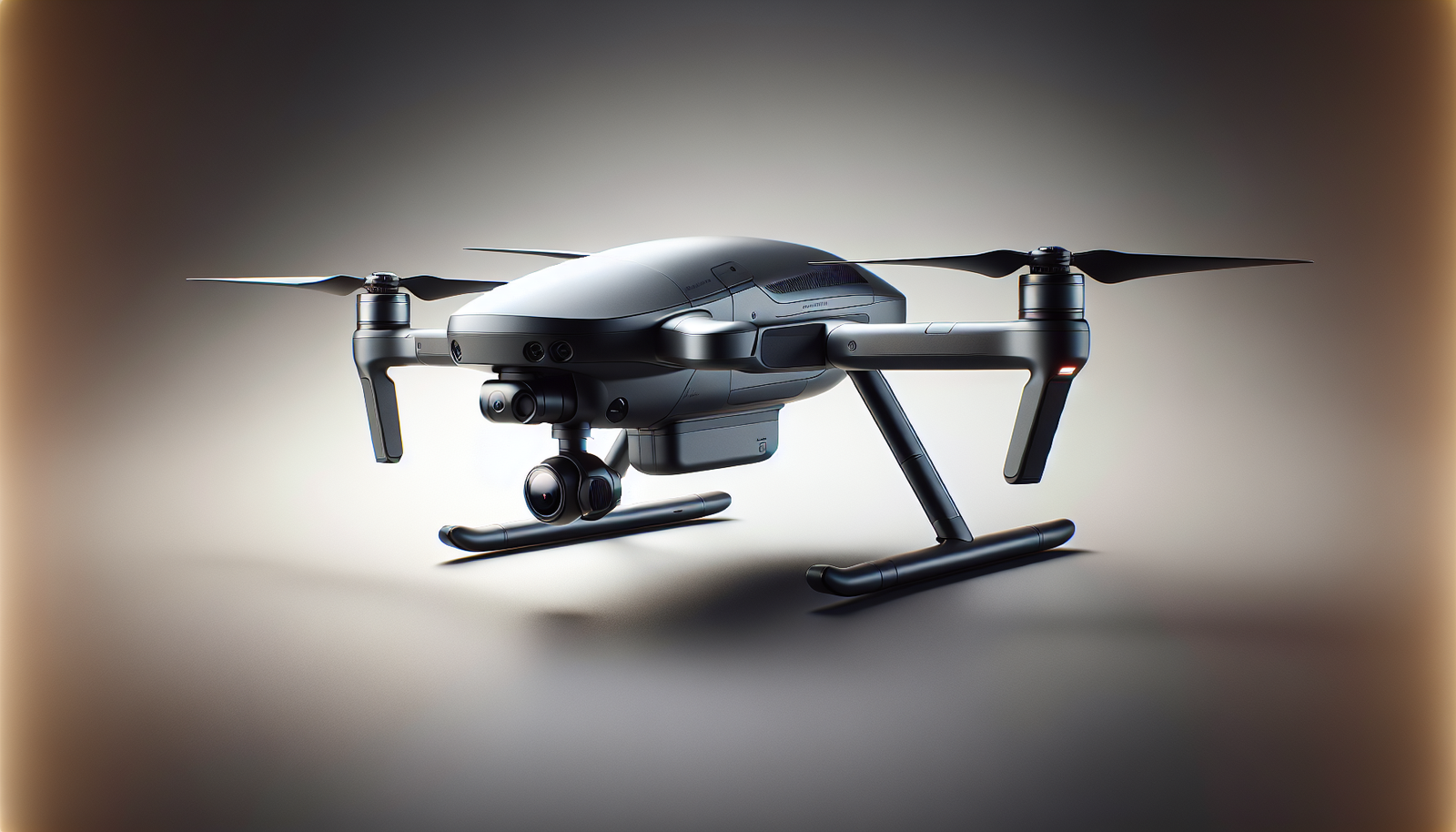
This review covers the Wingtra RAY Mapping Drone’s capabilities, performance, and suitability for professional aerial mapping workflows.
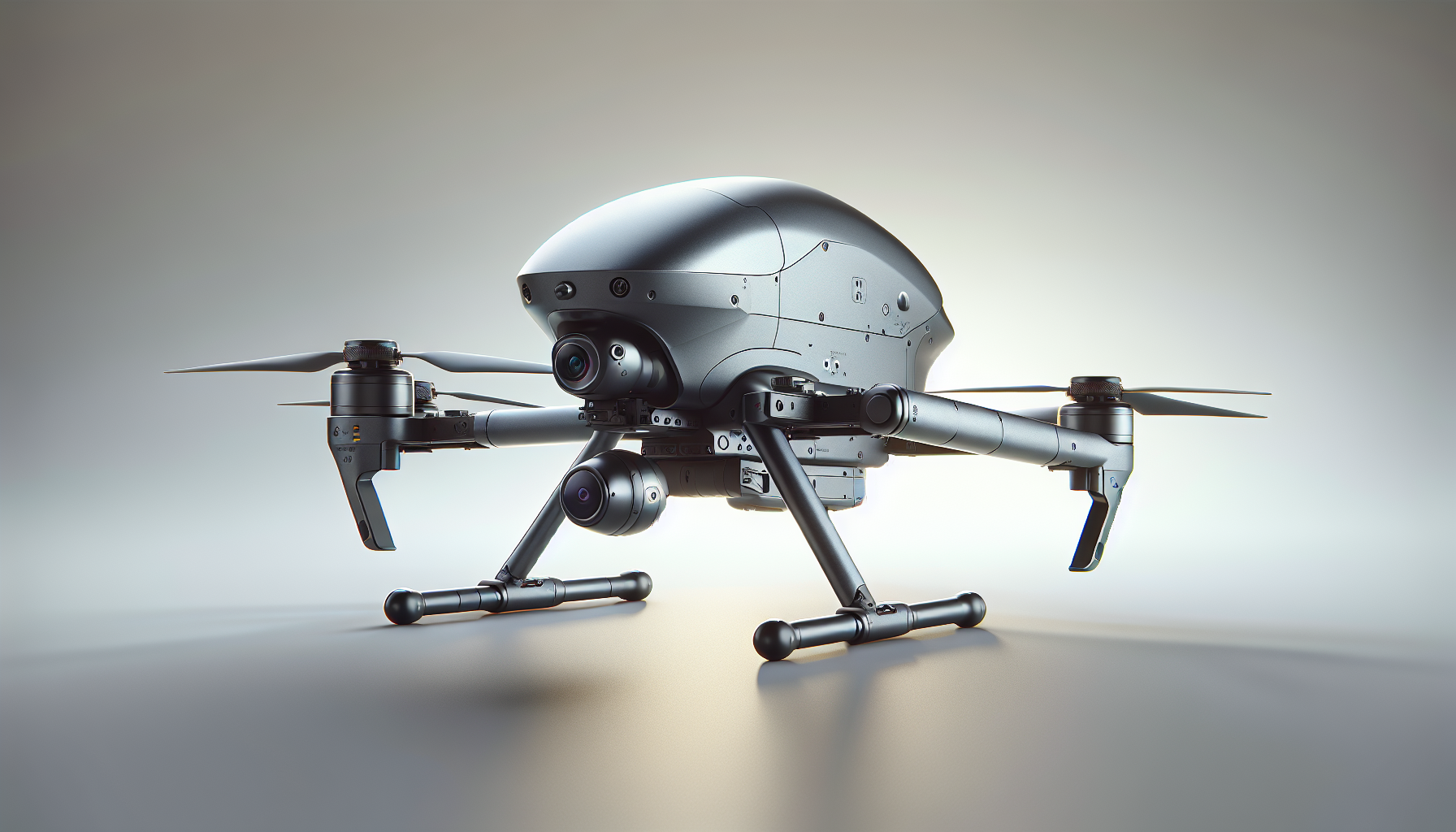

Quick verdict
You’ll find the Wingtra RAY Mapping Drone is aimed squarely at professionals who need efficient, survey‑grade aerial data over large or complex sites. Its VTOL configuration simplifies operations from confined locations while the fixed‑wing cruise gives you high coverage rates and endurance. If your priority is repeatable, high‑resolution imagery and LiDAR with centimeter‑level georeferencing and a workflow that integrates with standard photogrammetry and LiDAR software, the RAY is designed to deliver.
Key strengths at a glance
- VTOL convenience with fixed‑wing efficiency: launch and land in tight spaces while covering large areas per flight.
- Modular payload flexibility: choose cameras, multispectral sensors, or LiDAR depending on project demands.
- Survey‑grade positioning: RTK/PPK/GNSS options minimize ground control needs and speed up processing.
- Rugged, field‑ready build: simplified setup, durable structure, and redundancy for safer operations.
- Workflow compatibility: outputs fit common processing tools for rapid orthomosaic, DEM, and point cloud production.
Design, construction, and transportability
The RAY’s hybrid VTOL form factor is one of its defining features. You’ll appreciate:
- A sturdy airframe optimized for field use with protected elements and accessible components for maintenance.
- Foldable or compact transport options (depending on configuration) so you can move between sites with typical vehicle support.
- Clear, tool‑less access to batteries and payload bays for fast swaps and minimal downtime.
- Balanced weight distribution which helps stability during vertical transitions and in cruise.
How this helps you: the build focuses on mission reliability and quick turnarounds. You can deploy from confined pads, urban lots, quarries, or construction zones that would be impractical for conventional fixed‑wing takeoffs. At the same time, the efficient airframe lets you cover more hectares per battery or per mission than a pure multirotor.
Field ergonomics
You’ll notice the ergonomic touches when planning and executing missions: intuitive latches, clear payload mounts, and a ground control workflow that prioritizes speed. The modular design reduces time spent swapping sensors and checking connections. If you run back‑to‑back surveys, these small process improvements compound into significant time savings.
Flight performance and endurance
The RAY blends vertical takeoff convenience with long‑range fixed‑wing efficiency. In practical terms:
- Cruise efficiency: you’ll cover ground at higher speeds and with greater range than multirotor systems, reducing the number of flights needed for large sites.
- Transition control: the VTOL-to-cruise and cruise-to-landing transitions are automated and stable, limiting pilot workload.
- Wind handling: a robust control system and aerodynamic design give reasonable stability in moderate wind conditions, though extreme gusts still constrain operations like any aircraft.
- Redundancies: dual‑channel control, failsafe behaviors, and return‑to‑home logic reduce mission risk.
You should plan flights with conservative margins for wind and payload weight. Heavier sensors or dense LiDAR rigs will affect range and endurance; always verify expected flight times in mission planning software.
Payload options and sensor compatibility
One of the RAY’s selling points is sensor modularity. You can configure your platform for:
- High‑resolution RGB cameras for photogrammetric orthomosaics and 3D reconstruction.
- Multispectral sensors for crop health, precision agriculture, and vegetation indices.
- LiDAR payloads for dense, accurate point clouds suited to forestry, powerlines, mine surveying, and complex terrain.
This flexibility means you can adapt the same airframe for multiple project types. When choosing a payload, consider:
- Weight and balance: heavier sensors will reduce flight time and possibly require center-of-gravity checks.
- Data rate: high-resolution cameras and LiDAR produce large data volumes—plan storage and transfer workflows.
- Integration: sensor mounting, triggering, and calibration workflows are designed for professional use, but you’ll need to validate payload alignment and georeferencing before critical missions.
Positional accuracy — GNSS, RTK and PPK
If your projects demand survey‑grade positioning, the RAY supports professional GNSS workflows:
- RTK: real‑time kinematic corrections provide centimeter‑level accuracy in real time when reliable correction links are available. This lowers the need for dense ground control.
- PPK: post‑processing Kinematic workflows let you refine positions after flight, which can be more robust in challenging GNSS or comms situations.
- Integration: the drone’s GNSS hardware and firmware are designed to export metadata that integrates with photogrammetry and LiDAR processing pipelines.
What this gives you: reduced ground control point (GCP) requirements, faster turnarounds on deliverables, and more consistent repeatability between surveys. However, ensure you have the right survey procedures and validation steps—trusting RTK/PPK without verification can create costly errors.

Software, mission planning, and data workflow
The RAY’s ground control and mission planning software emphasize automation and reproducibility:
- Automated mission planning simplifies grid creation, camera overlap settings, and flight sequencing for both imagery and LiDAR missions.
- Intuitive interfaces help you set sensor parameters, altitude, ground sampling distance (GSD), and overlap percentages that match project accuracy targets.
- Export formats and metadata are compatible with common photogrammetry software (e.g., Pix4D, Agisoft Metashape) and LiDAR processors.
Workflow tips for you:
- Predefine standard mission templates for recurring sites to ensure consistency.
- Use conservative overlaps when you need high dense point clouds or steep terrain coverage.
- Plan battery or payload swaps mid‑project with a clear file management strategy to avoid mixing datasets incorrectly.
Data quality: imagery and LiDAR outputs
Imagery quality
- With high‑resolution RGB payloads and proper GSD settings, you’ll achieve photogrammetric results suitable for detailed orthomosaics, digital surface models (DSMs), and 3D reconstructions.
- Proper exposure control, overlap, and flight altitude control reduce noise and stitching errors.
LiDAR quality
- LiDAR payloads deliver dense point clouds with precise elevation data even under canopy in many cases, enabling biomass estimation, powerline clearance analysis, and terrain modeling.
- Points-per-square-meter and accuracy depend on the LiDAR model, flying altitude, and speed. Expect lower density at higher speeds and altitudes; mission planning must align with your point density targets.
Validation and QC
- Always perform check flights and validate outputs against known reference points or a subset of surveyed GCPs.
- Use metrics such as RMSE of checkpoints, point density, and noise levels to verify that your deliverables meet client specifications.
Typical applications and use cases
You can apply the RAY in a number of professional scenarios:
- Topographic and cadastral surveys: achieve detailed orthophotos and terrain models with reduced GCP needs.
- Mine and stockpile volumetrics: efficient coverage reduces flight count over large quarries and stockpile sites.
- Construction progress monitoring: repeatable flight plans help you measure progress and create accurate as‑built models.
- Forestry and biomass estimation: LiDAR and multispectral sensors give stand structure and health information.
- Precision agriculture: multispectral payloads and high‑resolution RGB support crop health indices and prescription mapping.
- Environmental and coastal monitoring: long coverage and high positional accuracy support erosion studies and habitat mapping.
Safety, redundancy, and regulatory considerations
Safety features
- Redundant control systems, failsafe return‑to‑home, and robust landing logic lower operational risk.
- Geofencing and no‑fly zone features help you remain compliant with local airspace restrictions.
- Clear preflight checks and health monitoring systems advise when components need attention.
Regulatory environment
- You must adhere to your local UAV regulations (line‑of‑sight, BVLOS restrictions, payload licensing, and pilot certification if required).
- If you plan operations beyond visual line of sight (BVLOS) or over people, check your local aviation authority’s permissions and the RAY’s operational approvals.
Best safety practices for you:
- Maintain a documented preflight checklist and log each mission.
- Validate GNSS performance and ensure that correction links are stable for RTK if you rely on real‑time solutions.
- Carry spare batteries, propellers (if applicable), and modular parts to minimize downtime.
Battery life, charging, and logistics
Battery management
- Expect longer coverage than multirotor drones, but endurance depends on payload weight and flight profile.
- Plan conservative mission margins—battery degradation, temperature effects, and headwinds will reduce endurance.
- Use hot‑swap batteries and a field charging strategy to keep missions moving.
Logistics
- Transport battery packs according to airline and transport regulations if you move between regions.
- For remote sites, consider portable charging stations or generators and keep spares to handle multiple sorties.
Maintenance, reliability, and service
Maintenance expectations
- The RAY is built for field serviceability, with accessible components and clear maintenance intervals.
- Regular checks on airframe integrity, sensor mounts, and GNSS calibrations will keep data quality high.
- Firmware updates and sensor calibrations should be part of your planned maintenance.
Support options
- Contact your Wingtra reseller for sensor configurations, training, and enterprise support packages as required.
- Enterprise customers typically get access to tailored training to accelerate safe, repeatable deployments.
Pros and cons
Pros
- High area coverage and efficiency compared with multirotor systems.
- VTOL flexibility for constrained launch/landing sites.
- Strong sensor modularity (RGB, multispectral, LiDAR).
- Survey‑grade GNSS support for RTK/PPK workflows.
- Rugged design with field serviceability and safety features.
Cons
- Initial acquisition cost and specialized training requirements can be higher than consumer drones.
- Larger sensors and LiDAR payloads reduce endurance—mission planning must account for tradeoffs.
- Regulatory limitations may restrict some BVLOS or urban operations without approvals.
- Data volumes require robust storage and processing hardware or cloud solutions.
Cost considerations and ROI
Acquisition and operating cost
- Upfront costs reflect a professional, survey‑grade platform and modular sensor options. Expect to budget not only for the airframe but for chosen payloads, GNSS corrections/licenses, training, and processing software.
- Operating costs include batteries, spares, transport gear, and ongoing maintenance.
Return on investment
- For large area surveys, mining, forestry, or repeat construction monitoring, the RAY’s efficiency and reduced flight counts can yield rapid ROI.
- Time saved on data acquisition and lowered GCP requirements translate to faster deliverables and more billable missions.
Practical tips for getting the best results
- Standardize mission templates (altitude, overlap, speed) for repeatability across surveys.
- Run a short validation flight with known checkpoints before committing to a full mission.
- Use conservative overlap and lower speeds in rugged terrain to improve tie‑point matching for photogrammetry.
- For LiDAR missions, confirm point density and scan angle tradeoffs in the planning tool.
- Keep a robust media and metadata handling practice—label flights, payloads, flight logs, and GNSS correction files consistently.
- Prioritize software training so your team can optimize processing pipelines and reduce postprocessing bottlenecks.
How the Wingtra RAY compares to alternatives
Compared to pure multirotors:
- RAY: greater coverage per flight, better energy efficiency, and fixed‑wing speed with VTOL convenience.
- Multirotors: superior low‑altitude hover capability, simpler payloads, but limited area coverage per battery.
Compared to traditional fixed‑wing drones:
- RAY: VTOL capability lets you use small launch/landing areas; fixed‑wing still wins on cruise efficiency but requires runway or catapult otherwise.
Compared to other hybrid VTOL systems:
- RAY distinguishes itself with robust survey‑grade GNSS integrations, professional payload compatibility, and field‑focused design. Evaluate sensor options and specific performance (range, payload capacity, and data rates) when comparing.
Technical breakdown (easy reference table)
| Category | Key detail |
|---|---|
| Platform type | VTOL fixed‑wing hybrid |
| Primary use | Large‑scale, survey‑grade mapping (imagery and LiDAR) |
| Payloads supported | High‑res RGB, multispectral sensors, LiDAR units (modular) |
| Positioning | GNSS with RTK and PPK support |
| Typical applications | Topography, mining, construction, forestry, agriculture, environmental |
| Safety features | Redundant control, failsafe RTH, geofencing |
| Field readiness | Rugged construction, tool-less access, rapid payload swaps |
| Software | Intuitive ground control, mission planning, outputs compatible with standard photogrammetry/LiDAR processors |
| Strengths | Endurance, area coverage, accuracy, modularity |
| Considerations | Cost, regulatory constraints for BVLOS, planning for payload weight vs endurance |
Suggested technical specifications (typical for the class)
| Specification | Typical value/notes |
|---|---|
| Takeoff/landing | VTOL (vertical) |
| Cruise speed | Higher than multirotor; exact cruise speed depends on payload |
| Endurance | Varies by payload; fixed‑wing cruise extends coverage compared to multirotor |
| Max payload | Depends on chosen configuration; affects endurance |
| Georeferencing | RTK/PPK capable for cm‑level accuracy |
| Data outputs | Geotagged images, LiDAR point clouds, flight logs, GNSS correction files |
| Operating temp range | Designed for field use; verify extremes per sensor |
| Transport | Compact for vehicle transport; check airline rules for batteries if flying |
Note: Exact numeric specs (speed, endurance, payload weight) depend on Wingtra’s current configurations and payload choices—contact your Wingtra reseller for the latest, model‑specific figures.
Training, licensing, and team considerations
- Training: You should plan for formal training sessions so pilots and data technicians learn best practices for mission planning, payload integration, and quality control. Wingtra reseller training packages are useful for reducing the learning curve.
- Licensing: Ensure your team has the required UAV pilot certifications in your jurisdiction. For RTK operations, ensure you understand the correction service subscriptions or base station setups.
- Team roles: Divide responsibilities—pilot-in-command, payload operator, and data processor—to streamline operations and reduce risk.
Common pitfalls and how to avoid them
- Underestimating data volumes: large orthomosaics and LiDAR datasets need strong storage, transfer, and processing strategies. Use SSDs and plan cloud or local processing resources.
- Skipping validation: always use checkpoints or secondary GNSS checks—RTK/PPK systems are powerful but not infallible.
- Poor mission planning in complex terrain: increase overlap and lower altitude in steep or vegetated terrain to ensure sufficient tie points and LiDAR return coverage.
- Ignoring environmental factors: wind, precipitation, and GNSS interference will affect data quality and safety. Be conservative on marginal days.
Who should consider the Wingtra RAY
You should consider the Wingtra RAY if:
- Your work requires large‑area, high‑accuracy mapping with repeatability.
- You need survey‑grade outputs (orthomosaics, DSMs, LiDAR point clouds) with centimeter georeferencing.
- You value VTOL flexibility for constrained sites and the efficiency of fixed‑wing cruise.
- You operate in industries like mining, construction, forestry, precision agriculture, or environmental monitoring and need an enterprise‑grade solution.
If your needs are strictly low‑altitude inspections, close‑range models, or very tight hover work, a dedicated multirotor might still be more practical.
Final recommendations
- Validate sensor and payload choices against project deliverables before purchase. The right sensor mix makes the platform far more cost‑effective.
- Invest in training and a robust data processing pipeline; hardware alone won’t guarantee high‑quality outputs.
- Maintain a conservative flight planning approach—account for payload weight, weather, and GNSS conditions to safeguard data quality and mission success.
- Work with your Wingtra reseller to tailor sensor configurations, receive training, and secure enterprise support to optimize uptime and ROI.
Contact and next steps
For exact sensor configurations, pricing, training options, and enterprise support packages, contact your Wingtra reseller. They can help you match payloads, GNSS options, and support plans to your specific operational and budgetary needs.
If you want, I can provide sample mission templates for common use cases (mining volumetrics, topographic surveys, or forestry LiDAR), a checklist for preflight and postflight QC, or a simple cost‑benefit worksheet to estimate ROI for your operation. Which would you like first?