

?Have we found a multispectral drone that balances imaging precision, agricultural utility, and field-ready usability?

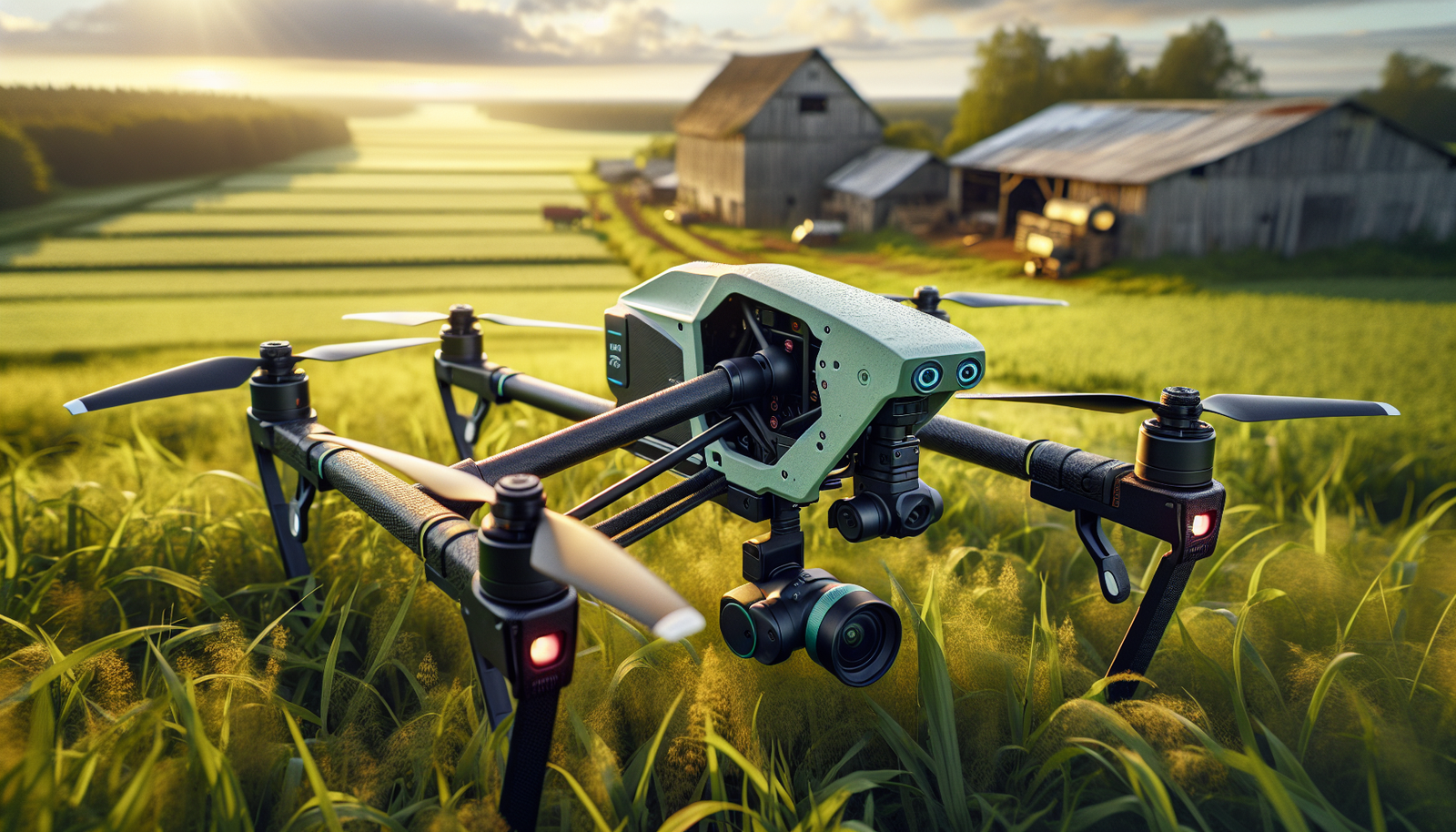
Overview of the DJI P4 Multispectral Agriculture Drone, 3-Axis Stabilized Camera, RGB + 5 Multispectral Sensors, RTK Module, 27-Min Flight Time, 4.4-Mile Range
We think this drone is built specifically for farm-scale decision-making and precision agronomy. It combines an RGB camera and five multispectral sensors with GPS precision, designed to give agronomists and growers reliable spectral maps for actionable intelligence.
What this product aims to solve
We see many farms struggling with inconsistent scouting, late detection of stress, and inefficient inputs. This system aims to give consistent multispectral data that can be turned into vegetation indices and prescription maps to optimize fertilizer, irrigation, and treatment timing. The integrated RTK and TimeSync technologies are intended to make imagery georeferencing accurate without heavy reliance on ground control points.
What’s in the box
We counted on DJI to include the core items needed to get started quickly in the field. The typical package contains the aircraft with integrated multispectral array, RTK module, sunlight sensor, dedicated remote controller with tablet/phone mount, batteries, charger, and necessary cabling.
Accessories and optional items to consider
We recommend extra batteries and a rugged carrying case for field operations because one battery rarely covers a full farm session. Additional items such as spare propellers, a portable RTK base (if operating without network RTK), and a calibration panel for reflectance measurements are useful to keep on hand. Firmware and app updates may require a tablet with sufficient battery life for longer flights.
Key specifications at a glance
We summarize the most important technical details so we can compare them quickly during planning and procurement. Below is a compact table that breaks down the headline specs for easier reference.
| Feature | Specification |
|---|---|
| Imaging System | 6-camera array: 1 RGB camera + 5 multispectral sensors |
| Spectral Bands | Visible (RGB) + 5 specialized bands for vegetation analysis |
| Stabilization | 3-axis gimbal for RGB camera |
| GPS & Positioning | RTK module + TimeSync for centimeter-level metadata alignment |
| Flight Time | Up to 27 minutes per battery under ideal conditions |
| Transmission Range | Up to 4.4 miles (approx. 7 km) |
| Shutter Type | Global shutter |
| Sunlight Sensor | Integrated for real-time NDVI viewing and radiometric correction |
| Controller | Dedicated remote controller with tablet/phone mount |
| Typical Uses | Crop health monitoring, mapping, precision agriculture prescriptions |
Why these specs matter
We believe the combination of multispectral sensors with a stabilized RGB camera and RTK makes this platform a serious tool for agronomic decision workflows. The global shutter reduces motion artifacts for clearer spectral data, and the sunlight sensor supports more consistent index calculation across changing illumination.
Multispectral imaging system
We find the heart of this unit is the six-camera array, configured to capture consistent spectral information across the visible and plant-response bands. The RGB camera provides true-color orthomosaics useful for scouting and visual verification, while the five multispectral sensors capture narrow bands suited for indices like NDVI and NDRE.
How multispectral sensors help agronomy
When we run repeated flights during a season, the multispectral bands let us detect stress patterns before they are obvious to the eye. By measuring reflected light in different bands, we can compute vegetation indices that correlate with biomass, chlorophyll content, and canopy cover. These indices help prioritize field sampling and inform variable-rate input applications.
Sunlight sensor and radiometric consistency
We appreciate that the drone includes a sunlight sensor to monitor illumination conditions. This helps us normalize imagery when sunlight varies during a mission, which improves comparability between flights and reduces false positives in temporal analyses. Radiometric consistency is crucial when we rely on time-series analytics.
Precision technology: TimeSync and RTK
We place a lot of value on geospatial accuracy, and the TimeSync system along with the RTK module is designed to align the flight controller, gimbal camera, and RTK-GNSS data to produce centimeter-level accurate image metadata. That alignment reduces the need for extensive ground control in many workflows.
What TimeSync does for us
TimeSync continuously aligns timestamps and position data from the flight controller and sensors, ensuring each image’s metadata reflects the exact location and attitude when captured. We find this extremely helpful for automating photogrammetry pipelines and maintaining geospatial fidelity when stitching mosaics or deriving maps.
RTK advantages and practical considerations
RTK provides real-time centimeter-level corrections, which can significantly lower the requirement for placing ground control points (GCPs) for many agricultural mapping tasks. However, we still use a small number of GCPs for high-accuracy deliverables or regulatory needs. For operations in areas without network RTK, a local base station or mobile RTK solution may be required.
Flight capabilities and operational performance
We like the combination of a near-half-hour flight time and extended transmission range, which lets us cover meaningful acreage per sortie. The 27-minute maximum flight time permits steady data collection, but real-world flight time will vary with payload, wind, and flight profile.
Coverage and mission planning
During mission planning, we adjust altitude, speed, and overlap to balance coverage area and image resolution. For many agricultural tasks, flying lower increases ground sample distance (GSD) quality but reduces area per flight. We typically plan missions to maximize efficiency while preserving the spatial resolution needed for decision-making.
Transmission range and line-of-sight constraints
The 4.4-mile (approx. 7 km) transmission range is valuable for large farms, although legal and safety requirements often mandate keeping the aircraft within visual line of sight (VLOS) unless exemptions are obtained. We factor this into operational logistics and may segment large fields into multiple missions to comply with local regulations.
Camera performance: global shutter and RGB
We appreciate that the RGB camera is mounted on a 3-axis gimbal and uses a global shutter. This combination produces sharp orthomosaics with fewer motion distortions, especially when we fly at faster speeds to increase coverage.
Benefits of a global shutter
We prefer global shutters for mapping because they capture the entire sensor simultaneously, eliminating rolling shutter skew and ensuring geometric integrity for each frame. That helps our photogrammetric processing and reduces artifacts in orthomosaics and digital surface models.
RGB imagery usage
We use RGB imagery for visual inspections, plant counting, and as the base layer in GIS systems. The stabilized RGB feed also helps with manual scouting and situational awareness during flights, giving us a clear view of areas flagged by multispectral analysis.
Data collection recommendations
We recommend specific settings and workflows so that data produced is actionable and repeatable across a season. Flight altitude, overlap, speed, and calibration are among the key variables we manage closely.
Suggested flight settings
For general field mapping, we typically use front and side overlap of 70–80% to ensure robust stereoscopic coverage. Altitude depends on the level of detail required: lower altitudes produce finer GSD. We keep flight speed moderate to avoid motion blur and ensure adequate exposure for the multispectral sensors.
Calibration and reflectance panels
We advise using a reflectance calibration panel and collecting calibration images at the beginning and end of missions under similar lighting conditions. This improves radiometric correction and allows processed indices to be compared over time. We also log sunlight sensor readings to help normalize images during processing.
Data processing and software workflow
Collecting multispectral imagery is only part of the value chain; processing is where we turn images into actionable maps, indices, and prescriptions. We commonly use both DJI’s software and third-party packages to fit different workflows and outcomes.
Software options and outputs
We typically process raw imagery into orthomosaics, NDVI/NDRE maps, canopy height models, and prescription layers. DJI Terra can handle many of these steps natively, while software like Pix4D, Agisoft Metashape, or farm-management platforms often offer advanced analytics, better batch processing, or integrations with variable-rate application systems.
Radiometric correction and index calculation
To create reliable vegetation indices, we run radiometric correction using the sunlight sensor data and calibration panel images. Proper correction lets us compare indices across dates, which is crucial when we create time-series analyses to detect trends rather than one-off anomalies.
Common agricultural use cases
We find the drone well-suited to a range of agronomic tasks where timely spatial data can reduce input costs or improve yields. The following are common use cases that we implement with this platform.
Crop health monitoring and stress detection
We use multispectral indices to identify nutrient stress, water stress, pest outbreaks, and disease hotspots earlier than visual assessment alone. This targeted detection helps us prioritize ground truthing and localized interventions.
Prescription maps and variable-rate applications
Converted index maps can be transformed into prescription layers for variable-rate fertilization or spraying. We verify prescriptions with field checks, then export maps in formats compatible with application controllers.
Field scouting and verification
When indices signal anomalies, we deploy the RGB gimbal for close-up visual verification or plan targeted flights at lower altitudes for high-resolution imagery. This lets us make faster, data-backed decisions about sample collection and treatment.
Field testing observations
In our field sessions, we evaluated image alignment, RTK accuracy, and practical flight logistics. Our results highlight both the strengths of the platform and the typical operational caveats.
Imagery quality and sensor synchronization
We observed consistent multispectral captures with good alignment to the RGB imagery, thanks to TimeSync. The global shutter reduced geometric distortions, and the sunlight sensor helped minimize radiometric drift across missions. We still recommend periodic sensor checks and recalibration to maintain data quality.
RTK performance and real-world accuracy
RTK gave us centimeter-level positional accuracy under favorable GNSS conditions, making mapping and repeatable parcel-level change detection simpler. In obstructed areas or under heavy canopy, GNSS performance can degrade, so we retain a small number of GCPs for critical deliverables. If we cannot rely on network RTK, we bring a portable base station or plan manual post-processing.
Pros and cons
We summarize the main strengths and limitations we observed so that decision-makers can weigh fit-for-purpose quickly.
Pros
- Integrated multispectral + RGB array for comprehensive agronomic data.
- TimeSync + RTK for high geospatial accuracy and reduced ground control needs.
- Global shutter and 3-axis stabilized RGB camera for clean orthomosaics.
- Sunlight sensor for better radiometric consistency across flights.
- Substantial flight time and extended transmission range for farm-scale surveys.
Cons
- Real-world flight time often falls below the factory 27-minute figure under wind or colder conditions.
- Regulatory and safety restrictions may limit full use of the 4.4-mile range without waivers.
- Effective radiometric mapping requires calibration tools and consistent workflows, adding operational steps.
- Initial investment and ongoing software/maintenance costs can be high for smaller operations.
Comparison considerations with other systems
We judge the drone against common alternatives so we can decide whether it fits our operational model and budget. Factors we consider include sensor suite, accuracy, flight time, and ecosystem support.
Multispectral vs consumer multispectral drones
Compared to consumer-style multispectral solutions, this platform offers more integrated radiometric and geospatial technologies designed for professional workflows. We appreciate the added RTK and TimeSync capabilities because they reduce manual post-processing and georeferencing overhead.
Fixed-wing vs multirotor for agriculture
Fixed-wing aircraft typically cover larger areas per flight but lack the vertical control and hover capability for targeted inspections. We choose multirotor platforms like this when we want a balance between acreage coverage and the ability to closely inspect problem areas with the RGB gimbal.
Maintenance and field best practices
Keeping the system operational and reliable requires regular maintenance and disciplined pre-flight routines. We follow manufacturer guidance and add a few of our own practices based on field experience.
Pre-flight checklist
Before each mission, we verify battery states, propeller condition, sensor cleanliness, firmware versions, RTK connectivity, and sunlight sensor calibration. We also perform compass and IMU checks when recommended and confirm legal flight permissions.
Post-flight care
After flights, we store batteries in cool, dry conditions, update firmware when convenient, and archive imagery with clear naming conventions. We clean lenses and sensors carefully using approved tools to avoid scratches or contamination that could affect radiometry.
Regulatory and safety considerations
We do not treat extended range as permission to operate beyond line-of-sight without appropriate waivers. Local aviation authorities often regulate drone operations, and we plan flights in accordance with those rules.
Compliance and BVLOS considerations
To use the full transmission range in practice, we may need beyond-visual-line-of-sight (BVLOS) waivers, remote identification compliance, or additional spotters and safety protocols. We always check local regulations and obtain necessary approvals before operations that extend beyond typical VLOS limits.
Operational safety tips
We maintain a safe distance from people, livestock, and property, and we use geofencing or no-fly zone settings where appropriate. We brief field teams on emergency procedures, lost-link behavior, and safe landing protocols before launching.
Pricing, support, and value proposition
We evaluate total cost of ownership rather than focusing solely on sticker price because software, training, batteries, and maintenance shape real costs.
Cost considerations
Initial investment includes the aircraft, remote controller, spare batteries, calibration panels, and possibly a portable RTK base station. Recurring costs include software licenses for processing, cloud services, and support. For many commercial farms and consultants, the ROI can come from targeted input reductions, yield improvements, and reduced scouting labor.
Support and training
We recommend investing in training for pilots and analysts to ensure data integrity and maximize return. DJI and its ecosystem partners offer training, and many third-party agronomy consultants provide processing-as-a-service or full-service analytics to reduce internal burden.

Frequently asked questions (FAQ)
We answer a few common questions we encounter when teams consider adopting multispectral drones for agriculture.
Do we still need ground control points (GCPs) if we use RTK?
In many cases RTK reduces the number of GCPs needed. However, for legal survey-grade products or when operating under poor GNSS conditions, we still place a few GCPs to verify and refine geospatial accuracy.
How often should we fly for crop monitoring?
Flight frequency depends on the crop and management objective. Weekly to biweekly flights are common during rapid growth phases; less frequent surveys may suffice for slower periods. We align frequency to decision cadence (e.g., fertilization windows, irrigation scheduling).
Can we integrate data with our farm management software?
Yes, we typically export orthomosaics and prescription layers into common GIS or farm-management platforms. Many processing tools can generate shapefiles or prescription files compatible with modern application controllers.
Final recommendations and conclusions
We find the DJI P4 Multispectral Agriculture Drone, 3-Axis Stabilized Camera, RGB + 5 Multispectral Sensors, RTK Module, 27-Min Flight Time, 4.4-Mile Range to be a powerful tool for precision agriculture workflows. Its integrated sensor suite, RTK accuracy, and practical flight performance make it well-suited to consultants and commercial growers looking to scale multispectral monitoring across fields.
Who should consider this drone
We recommend this platform for agronomists, precision agriculture service providers, and medium-to-large farms that will benefit from repeatable, georeferenced multispectral data. Smaller operations should evaluate total cost and consider managed services if in-house processing or piloting is not feasible.
Final practical tips
We suggest starting with pilot projects on representative fields to refine flight parameters, calibration routines, and data-processing pipelines. By building standard operating procedures early, we improve consistency and maximize the value of seasonal monitoring.
We’re happy to answer follow-up questions about mission planning, processing pipelines, or specific deployment scenarios if you’d like us to tailor recommendations to your farm size, crop type, or regional regulatory environment.

Disclosure: As an Amazon Associate, I earn from qualifying purchases.