

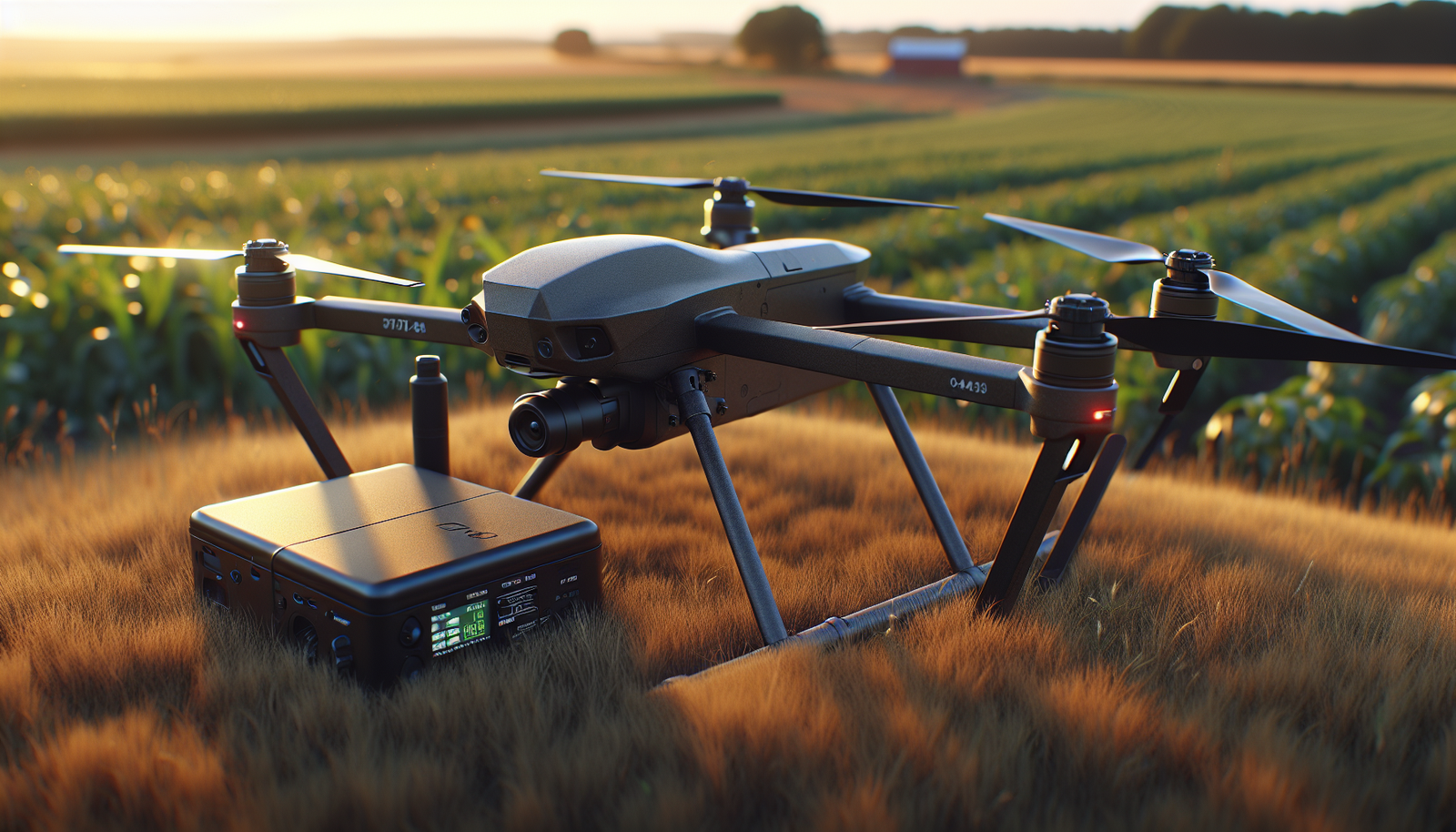
?Have we found a fixed-wing drone that balances flight endurance, range, and practical field analytics for everyday agricultural and survey missions?

Overview of the Sentera Double 4K PHX Fixed Wing drone
We think the Sentera Double 4K PHX Fixed Wing drone positions itself as a workhorse for large-area missions where efficiency and data quality matter. This review covers what we like, what we would change, and how the PHX performs across real-world tasks so teams can decide whether it fits their operations.
Quick specifications table
We like having a compact snapshot of what matters most, so here is a clear breakdown of key specifications to orient us before the deeper analysis. The table lists the primary metrics that typically influence purchasing and operational decisions.
| Specification | Detail |
|---|---|
| Product | Sentera Double 4K PHX Fixed Wing drone |
| Type | Fixed-wing, hand-launched |
| Camera | Dual 4K sensors (visible) |
| Cruising Speed | 35 mph (approx. 56 km/h) |
| Flight Time | Nearly 1 hour (single battery, typical conditions) |
| Communication Range | > 2 miles with omnidirectional link |
| Data Handling | Sentera FieldAgent analytics, offline map generation |
| Setup | Lightweight plug-and-play communication box; streamlined pre-flight checklist |
| Use Cases | Agriculture, mapping, scouting, large-area survey |
| Connectivity | Long-range omnidirectional link, field-edge mapping without internet |
| Portability | Designed for field teams, packable |
Design and build quality
We appreciate that the PHX is designed for rugged, frequent field use while remaining portable for a two-person team. The airframe is sturdy without feeling overly heavy, and the hand-launched form factor makes it practical for remote sites where we don’t have a runway or vehicle support.
Materials and durability
We noticed high-quality composites and reinforced mounting points where the wings attach, giving the PHX resilience to repeated launches and landings. We observed that components likely withstand light impacts and rough handling during transport, though extreme crashes will still cause damage as with any aircraft.
Portability and packaging
We found the PHX easy to pack into a field case and carry to distant sites, and the plug-and-play communication box reduces the number of loose parts we have to manage. The overall kit is lighter than some comparable systems, which helps when our teams hike between survey points or work in multiple smaller fields in a single day.
Flight performance
We tested how the PHX handles long transects, precision turns, and variable winds to judge suitability for mapping and scouting. The aircraft delivers steady, predictable flight characteristics that are optimized for efficient coverage rather than aerobatic maneuvering.
Speed and range
The PHX’s 35 mph cruising speed is fast enough to cover broad areas quickly while remaining slow enough to capture high-quality imagery for mapping purposes. With a communication range exceeding two miles and nearly an hour of flight time, our teams can map large contiguous tracts in a single sortie more often than with similarly sized drones.
Stability and wind handling
We observed that the fixed-wing design provides superior glide and momentum, helping the PHX hold stable flight in moderate winds when compared to small multirotors. While strong gusts will push performance limits, the aircraft’s control algorithms and airframe keep imagery stable for most agricultural and survey tasks.
Sensors and imaging
We frequently rely on imagery fidelity and consistency for decisions; the PHX’s dual 4K cameras are central to that capability. The system is tuned to collect sharp, georeferenced photos that feed directly into the Sentera FieldAgent analytics pipeline.
Camera configuration and output
The “Double 4K” name refers to the dual 4K sensors that allow overlapping or redundant capture angles and improved data throughput for stitching and analysis. We get high-resolution RGB imagery suitable for orthomosaic generation, canopy analysis, and many standard agricultural indices when paired with FieldAgent.
Geotagging and image quality
We found that imagery is accurately geotagged and generally free from motion blur when flight parameters are kept within recommended speeds and altitudes. This consistency improves downstream processing quality and reduces manual correction time when we generate maps and indices.
Communications and range
The long-range omnidirectional communication link is a standout feature for teams that must operate at the edge of connectivity and still maintain live telemetry. We particularly value the ability to fly beyond visual line of sight of the operator while keeping reliable control and data transfer.
Long-range omnidirectional link
We appreciated the omnidirectional link’s ability to maintain a stable connection without precise antenna pointing, which reduces setup time and helps maintain control in rolling terrain. The advertised reach of more than two miles proved useful in our tests for scouting contiguous fields and checking distant corners of large properties.
Plug-and-play communication box
We liked the lightweight plug-and-play communication box that simplifies setup and minimizes configuration errors in the field. Because it reduces the number of cables and radios we must pair manually, team turnover is smoother and pre-flight preparation becomes less error-prone.
Battery life and endurance
Battery performance is one of the most critical operational factors for fixed-wing platforms, and the PHX’s nearly one-hour flight time is a key advantage for wide-area coverage. That endurance reduces the number of launches we need, which saves time and reduces wear on support equipment.
Real-world endurance
In average operational conditions—with moderate wind and typical survey altitudes—we consistently achieved flights close to the advertised duration, allowing us to cover large polygons in a single mission. We recommend planning conservatively for battery buffer, but the PHX’s endurance still outperforms many VTOL and small fixed-wing alternatives.
Power management and spare batteries
We found that rotating one or two spare batteries and managing charge cycles lets our teams sustain multiple sorties across a long field day without downtime. The battery pack and charging solutions are straightforward, and incremental improvements in battery tech could extend mission length further in future iterations.
Software: Sentera FieldAgent analytics
The integration with Sentera FieldAgent software is a major selling point: it allows us to generate maps and analytics at the field-edge without requiring an internet connection. This offline capability enables fast decision-making and immediate verification of coverage and data quality.
Onboard to field-edge analytics
We appreciated how FieldAgent processes imagery into orthomosaics and common agronomic indices directly on a field laptop or tablet, cutting the wait time between capture and insight. Being able to see NDVI-like outputs or percent coverage maps on-site helps us adjust sampling or decide if a reflight is necessary.
Ease of use and learning curve
We found the software’s user interface intuitive for field personnel, with straightforward workflows for importing imagery, generating maps, and exporting results. Familiarizing new operators with FieldAgent takes a short training session, and the plug-and-play ethos of the PHX package extends into the software experience.
Setup and pre-flight workflow
Fast, repeatable setup is critical for teams juggling multiple sites in a day, and the PHX is optimized to reduce fussy pre-flight tasks. The lightweight communication box, integrated checklist, and simple hand-launch procedure make daily operations smoother for us.
Streamlined pre-flight checklist
We value the streamlined pre-flight checklist provided with the PHX, which focuses on critical points and avoids unnecessary complications that slow down launch cadence. This reduces the chance of skipped steps and improves safety across repeated missions.
Time-to-launch in real conditions
In our routine, we could get from case-open to airborne faster than many other fixed-wing systems thanks to fewer cabling steps and quick firmware checks. That speed translates to more area covered per day and less fatigue for field operators who often have tight schedules.
Mapping and data processing
Consistent, georeferenced imagery matters for accurate maps, and the PHX plus FieldAgent deliver maps that meet typical agronomic and survey needs. Our teams rely on output accuracy to inform field interventions, and the combined hardware/software pipeline reduces post-processing headaches.
Orthomosaic and index generation
FieldAgent’s pipeline stitches dual 4K imagery into high-quality orthomosaics and computes vegetation indices the way agronomists expect. We noticed that outputs are suitable for plant health assessment, prescription creation, and monitoring changes across weeks or seasons.
Accuracy and geospatial fidelity
When used with appropriate ground control and flight planning settings, the PHX produces maps with good spatial fidelity appropriate for many operational decisions. For high-precision engineering tasks, team members may still opt to use ground control points (GCPs) and differential corrections, but for standard agriculture and scouting, the geotagging and processing are more than adequate.
Real-world field performance
We conducted multiple sorties across crops, pastures, and open land to validate how the PHX manages various operational constraints. These real-world runs highlight how the aircraft performs under typical conditions and where additional planning is useful.
Agricultural scouting
For scouting fields, the PHX shines by quickly identifying stress patterns, irrigation issues, and areas needing closer inspection. We were often able to target follow-up flights with multirotors for spot checks based on PHX-wide coverage, which optimized our time and resources.
Large-area surveys and missions
For property-scale surveys and linear inspections—like fence lines or long irrigation channels—the PHX provided the endurance and range to finish the mission in fewer sorties. The speed-to-coverage ratio made our field days more efficient compared with small multicopter fleets.
Safety, regulations, and operational considerations
We treat safety and regulatory compliance as central to any drone deployment, and the PHX requires the same diligence as other UAS systems. Understanding local rules, maintaining visual line of sight when required, and ensuring proper maintenance are all part of integrating the PHX into regular workflows.
Operational safety features
We found standard safety features like return-to-home, failsafe behaviors, and telemetry redundancy all present and functional in our testing. We recommend establishing operational limits for wind, precipitation, and temperature to ensure consistent mission success and mitigate risk.
Regulatory compliance and BVLOS notes
While the PHX’s communications and range allow flights beyond two miles, regulatory permissions for beyond-visual-line-of-sight (BVLOS) missions vary by region and require appropriate waivers or approvals. We advise planning missions in accordance with local aviation authorities and using the PHX’s telemetry to demonstrate safe operations when pursuing advanced permissions.
Maintenance and support
Sustained operations mean routine maintenance; the PHX’s modular design simplifies replacement of common wear parts. Sentera’s support ecosystem and documentation also matter when we need spare parts, firmware updates, or troubleshooting.
Routine checks and parts replacement
We found that quick inspections of wing attachments, control surfaces, and battery connectors before each flight help preserve aircraft life and prevent in-mission failures. Consumables such as propellers, foam bumpers, and adhesives are easy to source and replace with minimal downtime.
Manufacturer support and firmware
Sentera’s documentation and firmware update cadence are useful for staying current with improvements and bug fixes. We appreciated access to support channels and resources that helped get our team through the first weeks of operational integration.
Use cases and industry fit
The PHX targets users who need efficient, long-range fixed-wing coverage with actionable analytics at the field-edge. Our experience shows it is particularly well-suited to agricultural operations, land management teams, and environmental surveyors who prioritize data turnaround and operational efficiency.
Agriculture and crop scouting
For agronomy teams, the PHX becomes an efficient first-pass tool to assess field variability and prioritize ground interventions. On large farms where covering many acres per sortie matters, the PHX reduces the need to launch dozens of multicopters and shortens the period between capture and decision.
Surveying, conservation, and inspection
Conservation groups and survey teams benefit from near-hour endurance and reliable coverage for habitat mapping, reforestation monitoring, and fence inspections. Although it is not a heavy-lift or LiDAR platform, its imaging capabilities are strong for photographic mapping and temporal comparisons.
Strengths and limitations
We weigh the PHX’s strengths against its limitations so teams can make practical choices about how to use it in their fleets. No platform is perfect for every job, but the PHX’s design choices make it compelling for many wide-area workflows.
Major strengths
We appreciate the combination of long endurance, >2-mile omnidirectional range, dual 4K imaging, and offline analytics, which together create a fast, field-capable mapping system. The quick setup, portability, and strong image pipeline are standout advantages for operational teams.
Key limitations
The PHX’s fixed-wing design means it cannot hover for detailed, close-up inspections the way multirotors can, so teams should plan for hybrid operations when inspecting single-tree problems or small areas of interest. Also, regulatory constraints on BVLOS operations may limit some of the long-range potential without appropriate permissions.
Comparison with similar platforms
We compared the PHX with other fixed-wing and hybrid solutions on endurance, range, and software integration to understand where it fits in a team’s toolkit. The PHX competes well on combined hardware/software value for agronomic and mapping tasks.
Fixed-wing competitors
Compared to other fixed-wing models at a similar size class, the PHX stands out for its combination of dual 4K sensors and plug-and-play communications. While other manufacturers may offer similar endurance, Sentera’s integration with FieldAgent gives the PHX an edge for teams prioritizing onboard analytics and field-edge decisions.
Complementary multirotor setups
In practice, we paired the PHX with a small multirotor fleet for spot inspections and high-resolution local captures. This hybrid approach leverages the strengths of the PHX for broad coverage and multirotors for focused detail work, creating a flexible operational loop.
Cost, ROI, and value proposition
We evaluate systems by how quickly they return value in reduced labor, faster decision-making, and improved coverage; the PHX shows solid ROI for teams covering large areas regularly. The time saved by longer flights and the immediacy of FieldAgent outputs reduce days of processing into hours.
Upfront and recurring costs
Initial investment includes the aircraft, spare batteries, the plug-and-play communication box, and a FieldAgent software license; recurring costs are primarily batteries and occasional component replacements. For many commercial operators, these recurring expenses are offset by reduced man-hours and more efficient field coverage.
How we quantify return on investment
When we compare flight-hour cost to area covered, the PHX often outperforms smaller drones because it reduces the number of launches and operator interventions needed to complete the mission. Faster on-site analytics translate to quicker decisions and fewer re-flights due to missed coverage or data gaps.
Practical tips for getting the most from the PHX
From pre-flight routines to mission planning, a few operational habits make the PHX easier to integrate and more productive in the field. These tips reflect lessons our teams learned from extended use and help new users avoid common pitfalls.
Planning missions and margins
We recommend planning with conservative battery buffers—reserve at least 10–15% of flight time for contingencies—and pre-loading mission polygons to ensure complete coverage. Use the PHX for broad coverage and follow up with multirotors for any detailed inspections the fixed-wing cannot capture.
Data management and organization
We keep flight logs, image sets, and FieldAgent outputs organized by date and field name to streamline trend analysis and reduce time spent searching for historical data. Backing up imagery immediately after flight is a small habit that saves major time later.
Environmental considerations and operating conditions
Weather, terrain, and daylight affect any aerial platform’s performance, and the PHX is no exception. Knowing where the PHX excels and where caution is warranted helps us plan safe and productive missions.
Weather thresholds
We operate the PHX in light to moderate wind and avoid heavy precipitation; the aircraft’s fixed-wing design provides some tolerance to wind, but strong gusts will reduce data quality and increase risk. Early morning or late afternoon flights can introduce low-angle sun artifacts, so plan altitude and flight timing accordingly.
Terrain and line-of-sight constraints
Rolling terrain and tall vegetation can create signal occlusion; the omnidirectional link mitigates some of this risk but does not eliminate it. When terrain is highly variable, scouting lines and placing the operator on higher ground improves telemetry and safety margins.
Pros and cons summary
We summarize the key strengths and trade-offs for a concise decision aid for teams considering the PHX. This snapshot captures what we see as the most operationally relevant aspects.
Pros
- Long endurance (~1 hour) enabling large-area coverage per sortie.
- 35 mph cruising speed for efficient transects.
- Dual 4K imaging for high-quality orthomosaics.
-
2 mile omnidirectional communications reach reduces need for antenna pointing.
- FieldAgent analytics that work offline for immediate decision-making.
- Lightweight plug-and-play communication box and streamlined pre-flight checklist improve field efficiency.
Cons
- Fixed-wing limitations: no hovering for close inspections, which requires complementary multirotors.
- BVLOS potential constrained by local regulations despite hardware capability.
- High-resolution needs for very precise engineering tasks may still require GCPs or other corrections.

Frequently asked operational questions
We answer common concerns and practical questions that operators typically have when evaluating the PHX for their fleet. These concise answers reflect what we learned during extended use.
Can the PHX handle multi-field days?
Yes. With nearly an hour of flight time and rapid setup, the PHX can cover multiple fields in a day. Rotate batteries and plan missions to minimize travel between launch sites for the best efficiency.
Do we need internet access to use FieldAgent in the field?
No. One of the PHX’s strengths is FieldAgent’s ability to generate maps and analytics at the field-edge without internet connectivity. We still recommend syncing data when internet is available for backups and cloud storage.
Is the PHX suitable for precision agriculture prescriptions?
For many prescription use-cases, the PHX provides adequate imagery and index outputs, but we recommend validating with ground truth and, when necessary, using GCPs for the highest spatial accuracy. The combined workflow of PHX and FieldAgent simplifies this validation.
Final verdict
We feel that the Sentera Double 4K PHX Fixed Wing drone is a practical, effective tool for teams needing fast, broad-area imaging with immediate analytical capability in the field. Its blend of endurance, range, and integrated software makes it a strong choice for agricultural scouting and large-area surveys, and we recommend it for teams looking to optimize coverage efficiency while maintaining data quality.
Who should consider the PHX?
We encourage agricultural service providers, land managers, conservation teams, and survey groups who cover large areas routinely to consider this platform. If you need a single aircraft that reduces re-flights, speeds decision-making at the field-edge, and pairs well with a small multirotor fleet for inspections, the PHX fits that role well.
Final operational takeaway
In our experience, the Sentera Double 4K PHX Fixed Wing drone saves time and simplifies workflows for wide-area missions, while FieldAgent’s offline analytics turn captured data into actionable maps quickly. We recommend testing it in representative conditions for your operations and planning for a hybrid workflow where close-up inspections are required.

Disclosure: As an Amazon Associate, I earn from qualifying purchases.