

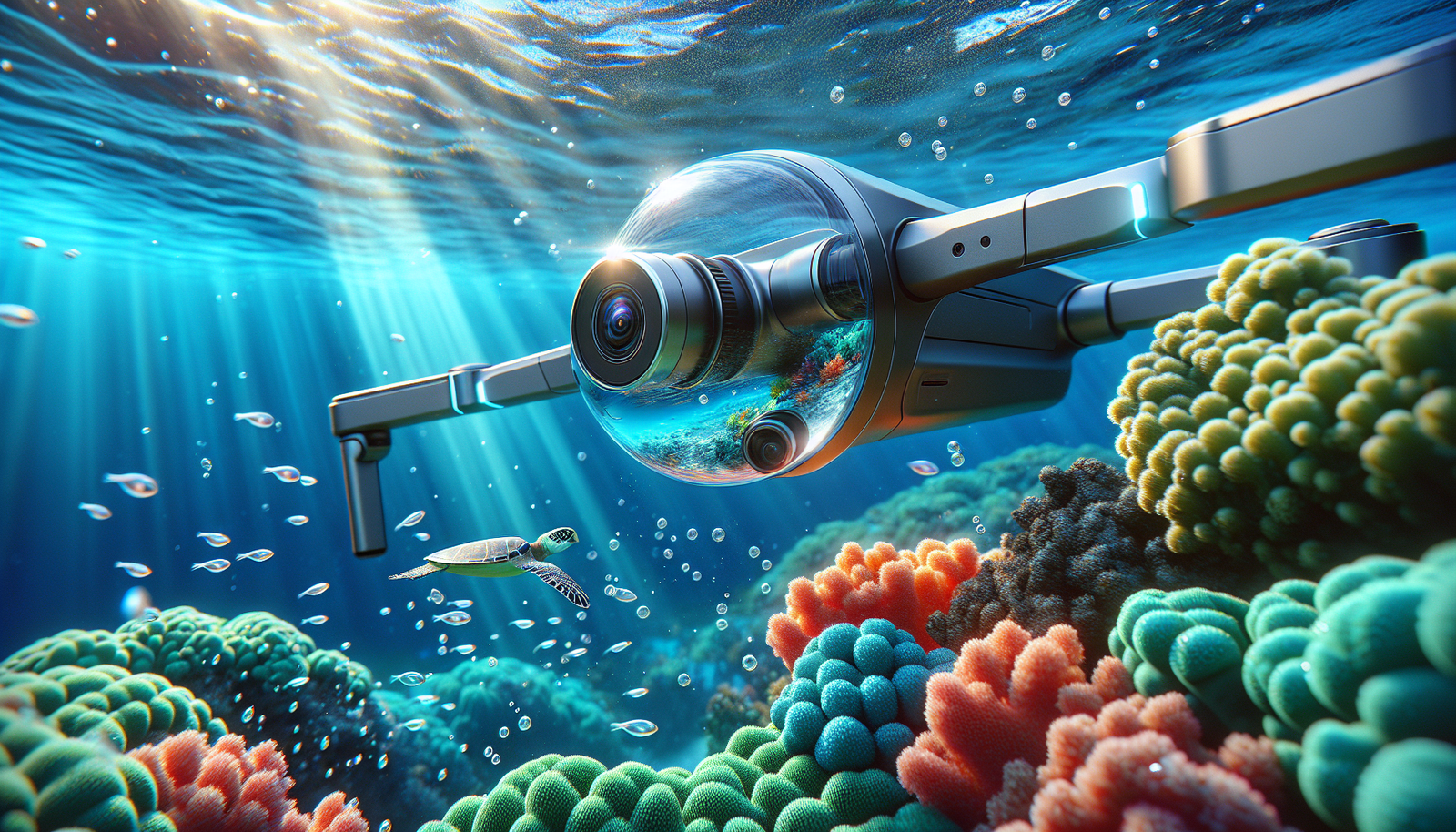
?Has anyone ever watched a small machine glide beneath the water and thought that the ocean suddenly seemed less like a mystery and more like a neighbor with a curious cat?
Underwater drones capture marine life
He watches the screen like a child watches a window. The machine moves, the fish move, and a tiny commentary forms in his head. The camera records colors, motion, and habits. The drone sends data to a computer. Scientists use that data to learn about life under the surface.
What are underwater drones?
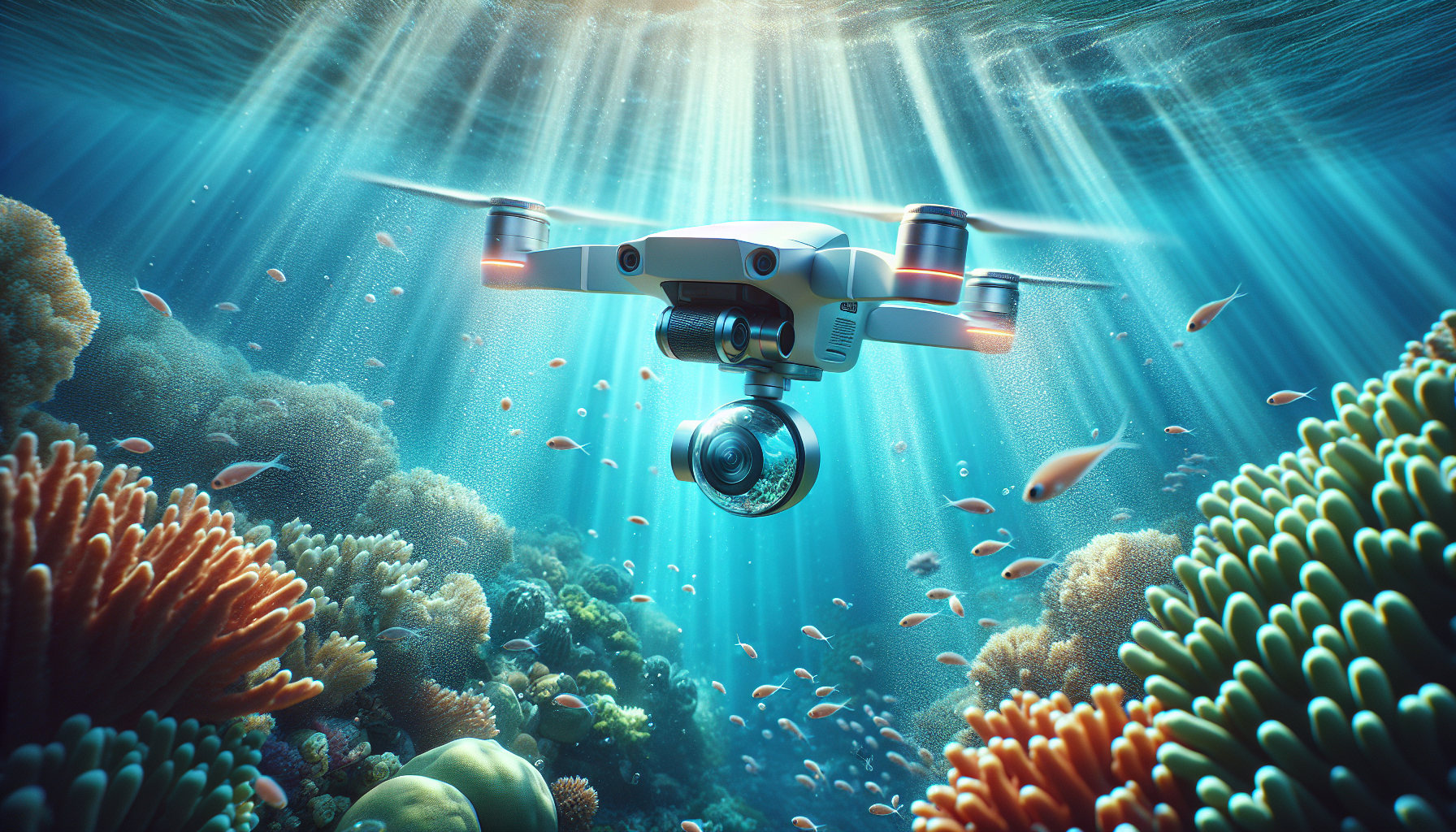
An underwater drone is a remotely controlled or autonomous vehicle. It moves through water to record video, gather samples, or map seafloor features. He can pilot one from a boat or a shore station. They come in many sizes and designs. Researchers and hobbyists use them for different tasks.
A brief history of underwater drones
Inventors first tested tethered submersibles in the mid-20th century. Engineers built early systems for industry and military use. Over time, battery and sensor advances made smaller units viable. Designers then created user-friendly models. The result is a wide range of devices today.
How underwater drones work
A controller sends instructions to the drone. Motors move the vehicle forward, backward, and sideways. Thrusters change direction and depth. Buoyancy control lets the drone rise or sink. Sensors feed information back to the operator. Cameras record high-resolution video. Software helps stabilize footage and process signals.
Key components of an underwater drone
He checks the main parts before every dive. Each part plays a clear role. The following table summarizes the core components and their roles.
| Component | Role |
|---|---|
| Hull | Protects electronics from water |
| Thrusters | Provide propulsion and steering |
| Battery | Powers motors and sensors |
| Camera | Captures images and video |
| Sonar | Maps features and senses obstacles |
| Lights | Illuminate dark environments |
| Sensors | Measure depth, temperature, salinity |
| Tether or modem | Transmits data and control signals |
Sensors and cameras: the drone’s senses
A camera gives visual information. He points the lens at a reef or a whale. Lights improve visibility in deep or murky water. Sonar maps the nearby area. Temperature sensors record heat patterns. Depth sensors give precise altitude above the seafloor. Chemical sensors detect dissolved oxygen and pollutants. Each sensor adds a layer of meaning to the footage.
Types of underwater drones
He chooses a type based on the task. The main classes are ROV, AUV, and hybrid systems.
- ROV (Remotely Operated Vehicle): An operator controls it in real time. ROVs usually use a tether for power and data.
- AUV (Autonomous Underwater Vehicle): It follows a pre-set mission without real-time control. AUVs log data for later retrieval.
- Hybrid systems: These vehicles switch between tethered control and autonomy. They provide flexibility for complex tasks.
Each type fits a set of needs. An ROV suits close inspection. An AUV suits large-area surveys. A hybrid suits mixed missions.
How researchers use underwater drones
He uses a drone to get close to animals without disturbing them. A scientist maps coral cover with a camera. A team tracks whale movement using tagged drones. An ecologist measures seagrass beds with sonar. Conservationists monitor illegal fishing with thermal sensors. Engineers inspect pipelines with tidy footage. Each use gives new data and new questions.
Case study: coral reef monitoring
A marine biologist sends a drone over a reef. The camera records coral color and structure. Algorithms count coral colonies and detect bleaching. The team compares current images to past records. They detect decline and target restoration actions. This method gives fast, repeatable results.
Case study: observing cetaceans
An operator pilots a drone near a pod of dolphins. The drone keeps a safe distance and films surfacing behavior. Researchers analyze surfacing rate, group size, and body condition. They also note injury and entanglement signs. The drone reduces the need for close boat approaches. Animals display fewer stress signs in drone footage than in boat-based surveys.
Case study: deep sea vents and rare species
An AUV descends near a hydrothermal vent. The camera finds tube worms, crabs, and strange snails. Sonar maps chimney structures. Scientists sample water chemistry with onboard sensors. The drone helps identify life forms that live under extreme conditions. The data challenges assumptions about where life can survive.
Techniques for capturing clear footage
He follows simple rules for good video. He keeps motion smooth. He holds the drone steady near a subject. He sets lights to match depth and water clarity. He places the camera at different angles for varied perspectives. He uses slow passes to capture behavior. He avoids sudden moves that scare animals away.
Lighting and color correction
Light behaves differently in water. Red light disappears first. Blue light penetrates deepest. He adds artificial lights to restore color. He uses white balance settings on the camera. He records a color chart before diving to correct footage later. He then edits to preserve natural hues without over-processing.
Sonar and acoustic methods
Sonar uses sound to map areas where light fails. He sends sound pulses and listens for echoes. He plots the echoes to create seafloor maps. Side-scan sonar gives wide-area images. Multibeam sonar creates detailed bathymetric maps. Passive acoustic sensors listen for animal calls, such as whale songs. Combined data give a fuller picture than video alone.
Data transmission and storage
He plans data handling before a mission. Cameras produce large files. Sonar and sensor arrays produce additional data sets. The operator uses high-capacity drives for storage. They often compress or transcode video to save space. Tethered systems send data in real time. Wireless acoustic modems send data at low bandwidth. He backs up data immediately after recovery.
Data analysis and machine learning
A technician reviews footage and labels animals. Machine learning models then learn patterns from labeled data. The models detect species, count individuals, and measure size. They also flag unusual events for human review. Automated analysis speeds up work. It also reduces human subjectivity in large datasets.
Ethical considerations when capturing marine life
He thinks about animal welfare before filming. The drone should not harass or injure animals. Operators maintain safe distances and avoid sudden movements. They limit time spent near sensitive species. When collecting samples, researchers follow ethical protocols. Permits often require impact assessments. Respectful behavior reduces stress on marine life.
Legal and regulatory environment
Agencies set rules for marine research and drone use. He must check local, national, and international regulations. Permits often cover sampling, tagging, and close approaches to protected species. Some areas prohibit drone operations near certain animals. The legal landscape varies by location. Operators should document permissions and follow reporting rules.
Commercial and recreational uses
Companies use drones for inspections, filming, and search operations. Commercial operators check hull integrity and pipelines. Filmmakers use drones for nature documentaries and tourism videos. Hobbyists capture personal footage and share it online. Commercial use often requires certification and insurance. Recreational use still benefits from careful planning and respect for wildlife.
Challenges and limitations
He faces technical and environmental limits. Battery life restricts mission time. Visibility declines with depth or turbidity. Currents push the drone off course. Acoustic noise interferes with sonar. Tethers can tangle or snag on structures. Cold and pressure at depth stress electronics. Manufacturers and operators work to reduce these constraints.
Safety and pre-dive checks
He performs a checklist before each mission. He inspects the hull for cracks. He tests thrusters and sensors. He verifies battery charge and cable integrity. He secures the tether or modem. He checks weather and sea conditions. He confirms emergency release protocols. These steps reduce risk and increase mission success.
Maintenance and repair
Regular maintenance extends drone life. He cleans the hull after saltwater exposure. He replaces worn seals and O-rings. He calibrates sensors and cameras. He stores batteries at recommended temperatures. He documents repairs and parts used. This routine reduces failures at sea.
Cost and accessibility
Underwater drones range in price. Low-cost models target hobbyists. Mid-range units serve research teams and small companies. High-end systems meet deep sea and industrial needs. Cost depends on depth rating, sensors, and autonomy. He balances budget with mission needs. Shared access and rental programs increase accessibility for small groups.
How to choose the right drone
He defines the task first. He lists required sensors and depth rating. He checks battery life and data transmission options. He evaluates durability and maintenance needs. He compares models on cost and support. The table below gives a simplified comparison for common needs.
| Use case | Suggested type | Key features to look for |
|---|---|---|
| Hobby filming | Small ROV | Simple controls, lights, HD camera |
| Coastal research | Mid-range ROV/AUV | Good battery life, GPS surface sync, sonar |
| Deep sea exploration | High-end AUV/ROV | High pressure rating, advanced sensors, long endurance |
| Industrial inspection | Tethered ROV | Strong tether, manipulator arm, high-resolution sonar |
| Wildlife monitoring | Quiet ROV/AUV | Low-noise motors, long camera range, thermal sensors |
Training and operator skills
He trains before heading to sea. He practices controls in calm water. He learns to read sonar and sensor outputs. He gains skill in framing shots and following animals. He studies local species and behavior. Training reduces accidental disturbance and improves data quality.
Safety for marine animals
Operators should follow simple rules to keep animals safe. They maintain a respectful distance. They avoid hovering directly above sensitive habitats. They keep low noise levels when possible. They never chase or corner animals. They stop the mission if animals show signs of stress. He chooses less intrusive options whenever possible.
Collaboration and community science
Community groups and researchers often share data. Fishermen, divers, and students contribute footage. Scientists then verify and use the material for studies. This approach expands data coverage and engages local stakeholders. It also builds public interest in marine conservation.
Public perception and storytelling
He frames footage to tell a clear story. Good footage can spark public interest and support for conservation. The team edits to highlight behavior and context. They add narration or text to explain findings. Story-driven footage reaches broader audiences and can influence policy.
Innovations and the road ahead
Engineers create quieter motors and longer-lasting batteries. Researchers integrate AI for real-time decision making. Teams develop swarms that cover more area with coordinated behavior. Sensors become smaller and more accurate. All progress expands the potential for discovery.
Environmental monitoring and conservation impact
Drones help track changes in habitat and species distribution. They provide repeated, comparable surveys over time. Scientists use the data to measure restoration success. Policy makers use the evidence to set protections and fishing limits. The result can be better outcomes for marine life.
Limitations of current studies
He notes gaps in data and understanding. Many species live in areas beyond drone reach. Long-term studies require sustained funding and access. Automated systems still need human verification. Biases in data collection can skew results. Recognizing these limits leads to better study design.
Tips for successful marine life filming
He prepares a clear mission plan. He rehearses launch and recovery. He keeps the drone at a steady speed near subjects. He uses multiple passes for different angles. He minimizes time near sensitive animals. He records environmental data to add context to footage.
Common mistakes and how to avoid them
He lists repeated errors that lead to poor outcomes. He undercharges batteries and runs out of power mid-mission. He ignores weather and faces rough seas. He aims lights too brightly and blinds animals. He fails to back up data and loses footage. He can avoid these errors by planning, checking gear, and following simple procedures.
Practical example: a field operation
A small team plans a coastal survey. They set a clear objective: map sponge beds across a one-kilometer stretch. He assigns roles: pilot, data manager, and safety officer. They check weather and tides. They test equipment on shore. They launch from a small boat and run parallel transects. The drone records video and sonar. After recovery, they back up data and note sea conditions. The team then processes images and reports findings.
Interdisciplinary work
He collaborates with ecologists, engineers, and data scientists. Each discipline adds value to the mission. Engineers maintain and upgrade vehicles. Ecologists interpret behavior and habitat data. Data scientists build models to process large datasets. Collaboration produces results that single teams cannot achieve alone.
Public policy and decision making
Officials use drone data to inform coastal planning and protected area designation. Clear maps and trend data support evidence-based decisions. Transparent methods and accessible data enhance trust. He documents methods and shares metadata with regulators and stakeholders.
Final thoughts
He feels a simple pleasure when a drone reveals a hidden scene. The footage can show play, struggle, and quiet routines. The machine gives a new perspective without boots on the seafloor. It brings distant life closer to those who study and care for it. The field will keep changing as technology improves. The guiding principle stays the same: gather data with care, treat animals with respect, and use findings to protect the ocean.
Conclusion
Underwater drones capture marine life in ways that were not possible a few decades ago. They extend human sight and sensors into places that were once inaccessible. They open new possibilities for science, conservation, and storytelling. He hopes that operators will use the tools with curiosity and responsibility. The ocean will continue to offer surprises, and the machines will keep sending back pictures of them.